Naturally cool


                                                                                  What a face.


Between training and photographing dogs as well as the every day chance meeting of dogs I have met some amazing ones. Amazing to me can mean many different things but typically it means that this dog has had an impact of some sort on me. I want to share the story of some of these amazing dogs with you.


The first one is a stand out for me, he was a strikingly handsome mixed breed who had an aire of confidence about him. I was doing a shoot at the beach with a rare breed, the Sloughi.  The guardian of the these Sloughis said she had a mix as well that she was going to bring for some beach fun. She had told me what the best guess of his mix had been but as he stepped out of the car he looked to me like he had quite a few breeds mixed in there. Most obvious was his markings and height which were very much like smooth coated St. Bernard although he was much leaner and athletic looking.

It was a typical fun and relaxed shoot with the dogs running around and me photographing the fun. As I watched this dog interact with others it was obvious to all the dogs on the beach that he had "top dog" status without being obvious about it. Several times dogs charged down the beach with a "I'm the boss of the beach" display. Some dogs at the receiving end of the charge would cringe in submission and others would challenge back with a dispute following. But when these displays came the way of our mixed boy he stood his ground, never flinched with a look on his face of sheer confidence. The beach challengers were immediately stopped in their tracks and redirected their furry.

                                                 Having so much fun makes a dog thirsty.


It amazed me to see that his unruffled behavior was clear to all the other dogs instantly. We had a great day, super shoot and lots of fun.  As we headed out a dog charged from out of nowhere and attacked one of the rare breed dogs I had been shooting. It was the darker male, the dog grabbed him by the throat.  In the blink of an eye the mixed breed companion of these greyhound like dogs flew into action, grabbing and pinning the attacker to the ground. As we gathered the dogs and got ourselves together he held this dog down. There was no fighting and no discussion he just did what was required.

The pack enjoying a run with Mom

On my drive home I was very upset about the end of the day incident but reflected on the remarkable behavior of this stately dog. He was definitely the strong, silent type. Later the guardian filled me in on hero dog, he was a street dog found in LA.  When she first heard of him the guardian hadn't thought she needed a dog in her life but he ended up wriggling his way in was truly sent when most needed. He had helped her through many life ordeals and been by her side since the day she didn't think she needed a dog.  That amazing dog always comes to mind when I think about all the great dogs I've met.

Mean what you say


While I'm out walking my dogs I often run into people who are shouting verbal cues at their dog.  They are in panic mode trying anything they can to get their dog to perform some sort of behavior.  Some of the more popular shoutings are heel, stay, leave it and come.  When I do a photo shoot many people will tell their dog to stay.  Then I ask them if their dog knows what stay means.  They look at me strangely and then answer no.  Isn't it funny then that they keep yelling the command at the dog, hoping somehow that the dog will get the idea.  Hmmmmm?

It doesn't work this way; you must teach, then practice, then proof and then train and train and train some more.   Dogs do not come with a built in knowledge of these words.  Although it may seem that they should; just like the names Fido and Rover, the words sit,come and stay seem to go with dogs.  But unless you take the time to teach your dog what these words mean, then they mean nothing to your dog, no matter how many times you say them.


If you have taken the time to teach your dog some of these words and still they don't seem to work, then you still need work.  And all those sit, sit, sit verbal cues that your yelling at your dog are undoing any training that you have accomplished.  What you are now teaching your dog is that "sit" means nothing.  It may also be creating a negative association to the word as well, because of your state.  In this state you are probably growing angry and your dog knows it.

When you start educating your dog you need to do it in a quiet area with no distractions.  You teach them until they are consistently performing the behavior.  Then you add a tiny distraction, say someone walking through the room.  Next you would practice in different rooms and then as your dog succeeds you build the distractions.  Never expect your dog to perform in an area of high distraction if you have not trained them to do so in a high distraction area.

If you find yourself in a situation that is stressful and you know that your dog is not going to be able to be successful in what you ask, then don't ask.  Don't use your verbal cue if you are not going to follow through.  Make a mental note, more training in high distraction areas.  Lots more training, you cannot expect your dog to do their job if you have not done yours.

Retirement, slowing down and guilt


Retirement; just picture it, feet up sipping on a margarita, soaking up the sun on a white sand beach.  Sound good?  For many people retirement is a goal, how often do you hear "I can't wait to retire."  To leave the 9-5 world behind?  Although it may sound glorious for many of us humans, what does retirement mean for our dogs?  First off; retirement is only relevant if your dog is either a working, very active or performance dog.  For many retirement never comes into play, and life just sort of slows down.   For my three, Tilley is the only true retiree while both Jessie and Luke have slowed down.

And unlike us; dogs don't want to retire.  Retiring means giving up or cutting back on what you love to do.  For many working dogs it means an end of working, often resulting in a complete change of lifestyle.  Retiring is tough for a dog; it is not the envious retirement that we all long for.  Many dogs have a very difficult time when they retire, but keeping active can help.  Taking part in other activities that aren't as straining on their aging bodies helps.  And quality time spent together, that is always a good plan.


Tilley was a high flying frisbee girl; I never taught her to fly, she was a natural.  She was first introduced to the frisbee as a means of controlling her chase drive.  She had started chasing shadows out of control, which soon became a dangerous situation.  I started with a tennis ball which she quickly transferred her obsession to, from there we moved to a frisbee.  It was pretty obvious even in the beginning of her frisbee days that she was a flyer.  Forget waiting for the frisbee to come to her, she always went and got it.  Even if that meant jumping heights that were easily over my head to get it.  It was because of these go and get it tactics that she was required to retire from discing.


At first we slowed down, I tried my best to keep the discs lower to the ground which for me was easier said than done.  I wrestled with the guilt of her not being allowed to frisbee anymore, it was tough.  But there comes a moment when common sense must rule.  It was no longer safe to allow Tilley to land her huge air jumps, she could break something.  For a long while we went back to the tennis ball but even that had to be done with care.  Tilley has an all or nothing mentality and even the simple act of chasing a tennis ball could be extremely dangerous.  So after weaning to the tennis ball at the age of 9.5 we had to alter throwing tactics to ensure her safety.


Luke was also an amazing disc dog.  He was never an air dog like Tilley and if he did happen to get some air we all cringed until he was back safely on the ground.  His frisbee days ended with Tilley's which isn't a bad thing.  He still loves ball but like Tilley he has a very strong drive, it's those retriever genes in them.  He will do anything to get the ball and often gets hurt in the process.  So throwing for him is also a very careful event.  Jessie is just about completely deaf and nearly blind, so she is never allowed off leash.  She is happy to follow a path along and loves nothing more than smelling all the thigns their are to smell in the park.  Gone are her digging days. 

So here we are now; Tilley is nearly 14, Jessie nearly 15 and Luke 10.5 years of age.  Tilley only now gets a rolled ball and it is only rolled a very short distance.  She can no longer join us on long walks, she can't do it.  This is another step in the guilt department, when you know they can't do it any longer but feel so bad leaving them that you consider bringing them along.  Just yesterday as we headed out to the beach I thought maybe, just maybe we should bring all three.  Then I thought about how far they would have to walk, the steep ramp, the sand and all.  It was too much for both Jessie and Tilley and we head out with our baby, our 10.5 year old baby.  My heart strings were being tweaked, it is very tough but as a guardian it is our job to make tough decisions.  It is when we are called upon to do what is right, and sometimes that means going against what your heart is telling you.


Once home from the beach we took the girls out for their snail pace stroll.  Up a small path and back again was enough to knock them both out for the evening, but they enjoyed every snail step along the way.

Very scientific


Finally; for those of you who have breeds of questionable heritage you can now find out just what's in the mix. DNA testing is becoming much more popular now that it is being offered to people who really need to know what they dogs heritage is. When you see a litter of mixed breed puppies they can look similar or each and every puppy can look entirely different. And yet those puppies have the same identical dna as one another so guessing as to parentage can be difficult.

Even if two purebred dogs have been bred their puppies can look very different; take the doodles for instance. You can have what looks to be almost pure labs all the way up to almost pure poodles and everything in between. So what if you add a third or forth breed? The results can number into the hundreds of different looking dogs. So if you really want to know what breeds were mixed together to create your dog you can now find that out through canine DNA testing.

Canine DNA tests available


You can have this test done with only a cheek swab although after I have researched the subject; it seems that a blood sample renders a quicker and more reliable end result. While you may be able to take a good guess at what breeds are in your dog; you could be way off. Some mixed breeds are simply the mixing of two purebred dogs while others can have 25 or more breeds in the mix. Dogs can come from a long line of mixed breeds adding more and more dna to the mix over the years.

But do you really need to know? I think it is more for interest sake; your dog may exhibit some behaviors that you want explained. Why do they chase everyone? Why does your dog seem so guarding? Some answers may be revealed by a DNA test but some may just be your dog being a dog. Remember all dog breeds are mixes; over the years humans picked and mixed what they preferred in a dog resulting in the breeds we have today.


Breeders of purebred dogs have been using DNA testing for a longtime. It is used to ensure lineage, coat color and type as well as health issues. Many canine disorders and diseases can be located by a DNA test before breeding.

So if you really need to know what may be in your mixed breed dog's lineage; you can now find that out for a small fee.

Nipping


Those tiny teeth, it may be fun and games but ohhhhhh man they can dig in.  Puppy nipping, no one likes it but it is a fact of life.  When I meet a new puppy I always allow nipping, much to the dismay of the new puppy guardian.  They are typically repeating "no bite, no bite, no bite," from somewhere behind me.  What I'm doing is looking for bite inhibition.

Inhibition:  the blocking or holding back of.


By allowing those little razor blade teeth on my skin; I can scrutinize the pressure that this particular puppy is using when he/she play bites.  This is extremely important, puppies need to learn to use their mouth properly before eliminating biting or nipping completely.  Stopping a puppy from nipping cold turkey can be difficult so if you first teach them to use their mouth gently the rest is much easier.  


Feedback is the key to stopping pressure first. When a puppy is nipping it is important to pay close attention to the pressure, reacting to the hard bites and letting the gentle mouthing and softer bites slide.  This is exactly the way another dog would play with your puppy.  Believe me; if your puppy bites another dog too hard she/he is going to hear about it.  I like to use a deep and loud OUCH.  Much like the tone an adult dog would use.  Once the sound is delivered you stop interactions immediately and ignore the puppy.  The puppy is left to ponder on what just happened.


Each dog is very different so you must adjust your feedback accordingly.  If you are too loud and scary, some puppies may be very afraid.  While other types may not even notice, making it more difficult to deliver a message.  The most important thing is to remove yourself; you are great, your puppy wants to play with you.  So by reacting to hard biting by removing the goods(you), your puppy gets the message.  


Teaching a puppy to use their mouth softly is very important.  So before you teach no nipping at all, make sure they know how to use those little razor blades correctly.

Routine


Surrounded by my dogs early morning while I type away in bed is one of my greatest moments.  We had a good night and Jessie is resting on my feet.  Its been a couple of very rough weeks with this Dementia; and working into a routine that works has been difficult.  Hopefully we have found the right combination to have a bit more smooth sailing for a while.

Routine can be a good thing or a bad thing.  It all depends on who is involved.  Some dogs thrive on routine, they know what to expect and like things as they should be.  Fall slightly out of the norm and they become nervous or anxious.  Others may become so set in their ways that they keep you on a time clock.  While other dogs can become painfully bored with routine and need a more scattered, random type life.  I like loose routine, switching things up every so often is a good thing.  Even for those type of dogs who seem to need routine, change can be a good thing.

I've seen dogs who become aggressive if they are not fed on time; hmmm like some men I know.  Others who expect a walk at 8:00 am every morning and if you happen to be busy, they will pester you and drive you mad. So you need a happy medium; casual routine.  When you add change, something different, a new twist to a routine day it helps your dog deal with more change.  I like change, I don't like to walk in the same park everyday or at the same time even.  If I happen to do something on a regular basis it's usually due to traffic, weather or convenience. 

But some routines like sleeping through the night are good routines.  This is the problem we are in right now.  Many puppies like to convince their new owners that they just can't sleep through the night.  You can spin into an awful routine of getting up with them every night, not good.  Often a behavior is hard to get rid of once it is set so keep your eyes open for new undesirable behaviors forming.  Unfortunately our non sleeping issue is due to Dementia and finding the right medication so that Jessie can sleep through the night is where we are at.


  Eating is a biggy; I have never had a routine feeding time.  Sometimes the dogs eat before me, other times after.  Exercise factors in when I feed my dogs; much more so than a time clock.  I do not want my dogs barking at me because it is past their feeding time.  And feeding itself can be routine or not, sometimes I just take a bowl full of food outside and toss it.  They actually love this and I feel that I am able to tap their inner canine when I feed this way.  Many times when Luke won't eat I'll toss his food, it triggers the prey drive in him and he will chase his food down and eat it. 

But even more than routine or no routine; a dog needs leadership.  If your dog is accustom to following your lead; then routine or no routine won't have such a huge impact.  But switch it up, too much routine for anyone makes for a boring life.

A dog


Just pondering; A dog is.

Canis lupus familiaris – our dog. History has put us together; kindred hearts keep us there. The dog has the unique opportunity to educate humans; not all humans will open up to this exclusive event; this loss is theirs alone. But for those who are willing; those who allow another species to participate in their constant evolution, these are the humans who will be forever changed. The culmination of canine and human creates a more compassionate human when the human truly connects with the dog concerned.

The canine life starts quickly; at the early age of 8-12 weeks they are whisked away from their litter and placed into a new and strange environment. There is a lot of pressure on us as guardians to get it right; it’s not always easy but we find a way to make it work. Those tiny minds come to us looking for guidance, leadership, trust, companionship and patience. It often boggles my mind as I work with a new puppy; just how much that fresh new mind can absorb. We take an animal of an entirely different species and we mold it to fit into our human world; pretty amazing when you think about it. They quickly learn life lessons; how to reside in a home, how to get along with humans and how to basically behave appropriately in a human world. I will often sit back and think to myself as I am working with a new puppy “man this dog has only be alive for 2 months or 3 months.” How can such a young creature learn so much in such a short time frame?

Dogs pretty much fit it anywhere they are needed or wanted. You have the high performance competitors; the therapy dogs that have guardians who want to help others and people who cannot see who rely on a canine. There are dogs work long hard days keeping other animals in line for their guardians, dogs who fight alongside with police and military personnel, dogs that help people with their day to day life. Whether it is a seizure alert dog, a hearing dog, a Seeing Eye dog or a service dog; they are always there to help.

We go back along way with our dogs. Since the very beginning of man and dog, man has been manipulating the genetic make-up of the Canis lupus familiaris to better suit their needs. Breeding specific dogs in the beginning to enhance certain behavior traits, dogs that showed superior hunting abilities, dogs that were more human friendly etc. But the manipulation quickly changed to one of exterior as well as interior; and there arose the different “breeds” fledge. Many of today’s biggest fans are on a constant quest to find perfection. Humans delve in the mystery of the visually perfect canine; the never ending manipulation of genetic DNA; trying to perfect perfection itself. Many are now at a point of repair.


From the humble beginnings; our dogs are the direct ancestor of the gray wolf. Very few resemble the
amazingly beautiful wolf now; all but a few have been transformed and mutated into dogs that have no similar appearance to the wolf from where they once came. Desirable traits were pulled and these dogs bred to create more suitable dogs to live with. With different classes of humans came the vast varieties of desirable canine traits both behavioral and aesthetically. And so with human intervention we are left with some dogs that are smaller than cats; dogs that have pushed in faces who have respiratory problems, dogs with so many wrinkles that they have skin health issues, long dogs with back problems, stout dogs who can barely move, huge dogs with short life spans and dogs who can barely reproduce themselves.

It is sad to see the state of some breeds now; perhaps we should look to the ancestor of our canines for guidance.

Bath time


Ah dirty dogs, I love a good ole dirty dog.  Not dirty as in it's been way too long since they've had a bath.  A dirty dog as in they've been out playing in the dirt.  Dogs love to get good and dirty don't they?  I love nothing more than a dog with a full face of sand or dirt happily digging up a storm.  Of course not everyone appreciates a dirty dog; especially Mom or Dad when it's bath time.


"Don't sweat the small stuff."  I love that saying, it is so true.  Having fun far out weighs a dirty dog and the requirement for a bath once you get home.  Of course there is some dirt that once dry; will simply brush away.  I love that dirt.  Just recently Luke was out with my husband (top photo) on a run.  With the recent downpours of rain there was a great deal of mud.  Unfortunately there had been accompanying winds that had blown leaves onto the mud.  Luke didn't see the mud when he took the slope at top speed.  In a flash he was down for the count.  It was worse than the image portrays, it was black gunk mud.  I laughed when we met up in the field later, knowing full well that my thought of maybe bathing the dogs in the afternoon was now cast in stone.

In her younger years Jessie would dig until she just about dropped.  Her mouth so chuck full of dirt from shoveling along with her little digging feet that she could barely close her mouth.  She often resembled a small pig on the ride home.  And as the saying goes "she was as happy as a pig in s*%t."  I know that many of you are now dealing with snow instead of mud but just wait, spring is just around the corner and the mud will all be revealed.  Then it's bath time, with the happiness of a dirty dog, there is equal happiness seeing the dirt wash down the drain.  Those little eyes peeking out from beneath the water and suds, there lies a clean dog under there. 

The beach is a great place to see dirty dogs.  All those noses stuffed full of sand.  You can see the sand filling every little nook and cranny as your dog charges through the toe spreading sand, glorious.  Sand is one of those dirts that just lingers.  When you think you've got it all, there is always more hidden in secret compartments.  Even after a vigorous bath it can still hideout.

But when the inevitable bath comes; I often think how wonderful it must feel to for a dog.  A 20 minute long massage with warm water running over you, not bad I'd say.  Once the initial "oh no a bath," passes I think some dogs quite enjoy a bath.  Although I'm sure that they would never admit it.  

So go ahead, throw caution to the wind and let them get good and dirty.  It washes off.   

Puppies puppies


It seems that puppy season has begun early this year.  Being that I am very involved with dogs there is never a shortage of puppies around.  Many people I talk to either know of someone who just got a puppy, they are getting a puppy or just got a puppy or they are having or have a litter.  And my puppy pains are stirring.  How wonderful is it to get a new puppy, a new little life to mold and guide, fresh and ready to take on the world?

Finding a puppy and choosing a puppy can be a daunting task.  Admittedly I find it very difficult; the more you know about what to look for the harder it is.  Acquiring a puppy should not be done on a whim; open the paper, go see the puppies and bring one home.  If you have thought and thought and consider if you really want a puppy, done your homework to figure out what type of puppy you want then you go.  If you find one right away then you are lucky.

No matter if you are getting a mix or not you want to know what type of temperament your puppy is starting off with.  You may be getting a dog from a shelter, a resue group or a breeder but you still want to know the temperament.  I have done alot of testing over the years and there have only been a few puppies who have raised red flags with me.  Many of them have issues, some issues need an experienced dog person to deal with and some are just basis issues most can work through.


A litter of puppies can be vastly different, you can have everything from a very fearful pup, middle of the road guys all the way to very dominant and even aggressive.  What if you go in, look at the pups and pick the one with the adorable white feet?  What if that puppy is very touch sensitive, reacts to touch in a negative fasion and is extremely aggressive in resource guarding.  Are you ready to tackle these behaviors?  If you have small children then this would totally be the wrong dog for you.

Although many people think that temperament testing is useless and consider environment to play a larger role in how a dog turns out, I believe it is very important.  By understanding how a puppy reacts to different things in life that will be thrown at them you can better decide on what puppy should go to what type of home.  There are litters that are all great and anyone could take anyone of the puppies home.  But most have big differences and you cannot see these differences if the puppies are never pulled out alone and tested.  They will react entirely different within the pack than out.

Environment, socializing, training and basic life lessons play a huge part in how a dog develops.  Each and every dog I have ever had came with some sort of issue, mostly easy but sometimes there were issues that were alot of work.  You should know what issues may arise and decide if you are willing and capable of dealing with those.  There will be issues that arise throughout your dogs life that cannot have been foreseen but at least you can have a general idea of who your puppy is if they are tested.

It is the inside of the puppy that you want to look at, not the outside.

Vestibular- a whole year

I cannot believe a year has gone by already; although it does seem like forever ago.  For some reason this disease has put a great deal of distance between the onset and now for me, weird.  My husband feels that it was yesterday that she was struck.  Odd how time passes differently for everyone.  Anyhow, Miss Tilley has made it through a year of tilting, imbalance and basically a world that is no longer on an even keel for her.  She was struck with Vestibular disease January 11, 2010, a year ago.  Boy has she come a long way since that horrible night. 


January 10, 2010 had been a great one.  We took the poodles to the beach; both Luke and Tilley ran and played on the beach like young dogs.   In the blink of an eye it all changed, the morning of January 11, 2010.

So here we are a year later; and I have to tell you that she is doing amazingly.  The residuals of the disease have given her a permanent head tilt, but she can run and even catch a ball now.  She must be very careful when she lowers her head to pick it up her ball as this motion causes her to tumble over often.  And I believe she is off balance in general.  She seems to tip over if she is not looking forward.  She has a very hard time going downstairs but she does it, again the lowering of her head is a difficult behavior.  She has a slight right eye droop that most would not notice and because of her head tilt she has a natural tendency to turn left.    Turning right takes some work but she manages with some effort.

This female wolf  is behind a double fence for her protection from the younger wolves.  15 years of age is a very old Wolf.

As I said in my blog yesterday, there was a wolf at the California Wolf Center with Vestibular disease.  I was fascinated by this and reminded that wolves and dogs share 99.98% genetic make-up.  What dogs get; wolves can get.  I just never considered a wolf getting vestibular disease.  But Bonnie told me while we were discussing the crooked wolf that it is rare because a wolf's life expectancy in the wild is only around 5-7 years.  This girl that had struct with Vestibular at the center was 15, she had far out lived her wild relatives. 

Vestibular disease is awful in the beginning but it is not a death sentence.  A dog stricken with this disease will need around the clock care in the first few days.  Then things start to change and as everyday passes you see a tiny improvement.  Some days may be worse than others but you get through it and so do they.  Each dog is different and each case different.  Some dogs are hit hard with the disease, I feel that Tilley was lucky as were we.

I think that it is very important to share this information, it could someday save a life.  Since Tilley has been hit with Vestibular I have heard of several dogs being euthanized at the onset.  It is a horrible thing to watch but the worst of it over in a couple of days.   I wrote this blog at the end of the fifth day after the onset. 

These two videos show what Tilley looked like in the beginning. 

But look at her now!!!!!!!!!


California Wolf Center


This morning I would like to share my recent trip to the California Wolf Center with all of you.   This trip was my Christmas present.  I am admittedly not the easiest person to buy for and I have to say that my husband did amazingly getting me this.  I have been very excited from the moment I got it the information to take this trip.  It was a bit dampened by my old girls recent health issues but as my blog stated yesterday we made arrangements for their care by my son.  So we left on Friday morning and returned Saturday at noon.


The trip was glorious, not only because of the fact that we got to visit the wolves but the scenery is spectacular.  A very welcome break to the hustle bustle of Southern California.  The weather could not have been more perfect, nice and cold.   The Wolf Center is a mere 4 miles approx. outside of Julian, CA.  The drive from Julian to the Wolf Center is beautiful and with all of our recent rain, green.  As you pull in off the main road you start your trek on a dirt road (love it) and again with all the rain, a very mucky dirt road.  We were luckily in a big four wheel drive SUV, wish I'd taken my xterra though, it would have been a great off road drive.  Anyhow, we were met at the locked gate by Bonnie who is the Animal Care and Facilities Manager. 

Another quick trip down the road and you are at the facility.  We started immediately, I got my two cameras ready and couldn't wait.  My husband had hoped to get me inside the enclosures but at this time of year, mating season is just around the corner.  Because of this, inside visits are not available right now.  So instead of waiting we decided on the outside visit and could go back if we liked it, which I will be doing. 

The first enclosure we saw was the Alaskan Gray wolves.  When we walked up two of males in the enclosure  scooted away to the back and the one and only female in the enclosure stayed and allowed me to get fairly close for some beautiful images.  She was very relaxed as you can see. 


We went around the back to see if we could get some photos of the boys but they were being elusive.   During all our viewing Bonnie filled us in on the wolves, who they were, how long they'd been there, who was who in the hierarchy and all the behaviors that they display.  I was fascinated by their behavior, they are a very easy read and display very similarly to our dogs.  We left that enclosure and headed over to the Mexican Wolves. 


These guys were very hard to photograph as they were extremely skittish.  They basically did drive by viewings of us and I tried my best to move as little as possible or they were gone in a flash.  Wolves in general are extremely suspicious of anything new, be it a person or object.  So shooting as calmly as I could possibly accomplish I got a few shots.   Mexican wolves are an endangered species, these wolves are housed here for re release in hopes of re-populating the species.


This male had been eating before we got there.

Checking us out.

This ball was placed into the enclosure and covered with food to entice play.  First it was licked by the female and then marked by all of the males one after another. 


After our visit with the Mexican Wolves we then moved back to the Alaskan Grays in hopes of seeing "the boys."  We were not dissapointed.   They were up close and personal.  This pack of four boys has actually divided themselves and their enclosure into two separate areas and packs.  The area up front where I shot most of the images is a neutral territory but up at the back had been divided.  They did this themselves as Bonnie explained to us and seem to stay clear of each others sides.  The one female goes where she wants. 


As I stood and watched the communications going on between the males it was clear that something was going on.  It was not long before a dispute errupted, it was very loud and impressive but no one got hurt.  Wolves are hardwired so that they do not hurt one another, this is instinctive.  There is a lot of noise and posturing but that is where it usually ends.  There is a rare occasion when it goes further than this.  Once the dispute was over, the posturing continued for quite a while. 


We had booked the private tour, I enjoyed having our guide to ourselves.  This enabled me to ask the zillion behavior questions that I had.  Hearing how passionate Bonnie was about the wolves along with the wealth of knowledge she was able to share with us made the trip.  

By the end of the tour the boys had settled down and come once again into the common grounds.  I was cold, my hands were freezing but it was fabulous.  I could have stayed for several more hours just to watch the subtle inner communications within the pack. 

There was also a very old girl that was housed within the enclosure.  A 15 year old female Alaskan Gray with Vestibular Disease, she had a tilt just like my girl Tilley.  I will discuss her, Tilley and Vestibular disease in tomorrows blog as it will the year Anniversary from when Tilley was struck with this disease.  

If you are in the area; I would definitely recommend a trip to the California Wolf Center.  This is a wonderful place for anyone to learn about this amazingly beautiful species that is very misunderstood.  The wolf is a  much needed predator, they will all but disappear without  human intervention.  It was we humans who detroyed their vast populations and it is now up to us to fix it.  

Visit them on Facebook as well:   California Wolf Center

Being away

Okay; I was only gone 25 1/2 hours but I still miss my dogs like crazy.  Being that two are very, very old and have "issues" going on right now I hate to go at all.  But this was my Christmas present; a trip to the California Wolf Center up in Julian, CA.  (More on that in tomorrows blog)  So we decided to head up late morning and come back the following morning early.  My son was here to care for the dogs but I still worry.  It comes with the territory, if I'm not worrying about one of my kids, I'm worrying about my dogs. 

I find that when I am away I am drawn mystically seemingly by a canine magnet to any dog in the near vicinity.  This morning I strolled the streets enjoying the very cool air when I came across an SUV with a Labradoodle, Irish Wolfhound and a Jack Russell.  It really resembled my pack and everyone was wagging at me.  I know better than to touch a dog in a car so I gave them some space but chatted up a storm.  I wished I'd grabbed my camera before I left the room, but I hadn't so I moved along after we finished chatting. 


The day before we had seen the cutest little dog sitting patiently as her owner waited for the next ride.  She was a horse carriage driver and she had her tiny companion in the passenger seat.  This time I did have my camera and capture the little patient pouch.  She seemed to be enjoying her sit in the sun with her owner and she was cute as a button. 

Before that we had seen two beautiful pitbulls leaving a very dog friendly restaurant.  The dogs were happily coming down the stairs after a nice meal with the folks.  I immediately thought of my guys.............ahhhh I miss them.  I think how they would enjoy the cool air, a walk in the woods, well maybe just Luke now but even just sitting in the woods, I can't get them off my mind.  I made several calls home to check in, everyone was fine. 


By this morning I was more than ready to head home and see my dogs.  Even though I do miss them it is good to get away sometimes.  Especially now with all the extra care around the clock, a day of rest is good for everyone.  That said the minute I open the door and see a leaping crazy poodle, I'm very happy to be home.   I wander around looking for the two old ladies.  Jessie is curled up and hasn't heard us yet, so I gently place my hand on her as she looks up.  I'm not sure if she knew we were gone but she was happy to see me.  Tilley was sound asleep in bed with my son, she was very happy to see us but not so anxious to leave her cozy spot.  It's good to know that when we are away, they are safe and sound in their own home.

Sleeping with dogs


Good Saturday morning; all of my three dogs are sleeping on the bed with me, I like it this way. They don't actually sleep on the bed; they typically join us in the morning when we have our coffee and then when I blog. It is a special time for them and for us. But some dogs should never be on the bed. Beds and sofas hold much controversy; should they or shouldn't they be allowed up? For me there are strict rules about the subject and regulations that need to be set in place.

First; all dogs should ask to come onto the your bed or the couch. And by asking I mean looking and you and waiting the "okay" before coming up.

It should be easy to ask them to get off; no complaining. Any growling, laser beam glares, lip curls or posturing is an automatic ticket to the floor. Many people tell me that their dog growls if they move them around in bed. This is a clear sign as to who your dog thinks is the boss; they are.

If they are not allowed on for some reason on a particular day they should be comfortable laying on their bed on the floor.

Dogs can become very stuck in their ways; like us they are all different. Some do great with routine; others become obsessive about routine. The ability to be flexible is a good trait; both for us and our dogs. If your comes unglued by the simple fact that they cannot lay right beside you; then time to switch it up.

It is fairly simple to link a positive association to "getting off" the bed or couch by rewarding your dog with high value treats for doing so. If you just tell them to get off and shove them off you may end up causing a physical display or challenge. So even though getting off the couch or bed is not the optimum behavior in your dogs eyes; it can be made into an okay thing with a "thank you" tidbit.

So beds and couches are fine; but there must be rules and the rules should essential be your rules, not your dogs. ;)

So..............what are we doing?


With their stomachs full they watch for signs of my location destination. Luke is my closest watcher, he actually watches my feet to see which direction they are headed. Being that the dogs just ate, that means that we are doing a whole lot of nothing, or at least they are doing nothing. This is part of the bloat and gastric torsion regiment we set in years ago. So I always plan to do my "without the dogs" stuff after breakfast. Before breakfast is their walk time, very early, then they have their cool down and then breakfast.


It doesn't matter what you are doing, your dog wants to do it with you. This is something you need to consider when getting a dog. If you are a jogging type then you'll need a dog that can keep up. If you love nothing more than to watch movies 24/7 then you'll need a sound couch potato type. Of course even couch potatoes need mental and physical exercise but they are happy with the spare time being spent on the couch.


First thing on the weekday mornings in our house is iffy for the dogs. They loosely watch the comings and goings. It could mean a walk, although more than likely it means waiting for me to get back from the gym first. They know this and only keep one eye open just in case. Sometimes I forgo the gym just so that they get first dibbs, they love when I throw them a surprise, it's good for them. Then there are times when I choose to garden first thing in the morning and the troops fall in to place outside with me.

When we lived back in Canada I often skated on a huge naturally ocurring skating rink that formed in the field behind us. It was pretty much as big as we wanted to shovel. The dogs that we had at the time loved it, we skated and they ran the snow banks beside us. They obtained enormous amounts of exercise running through the deep snow after us. And our time together was wonderful. After our skate we'd all pile back into the house full of snow, the dogs did their drip dry first and then joined us inside for a movie.

Of course weather factors in a lot when considering bringing the dog. Sometimes there are places that are just too hot or too cold for the dog or there may be somewhere that you are going that is not dog friendly so it may be best to leave them back in the safety of your home. The more outtings that you offer your dog the easier it is for them to adapt to new surroundings and situations. A dog friendly world is one where dogs are much better behaved.

Although my guys love their walks and outtings they love nothing more than times when the whole family is home and we are watching t.v. or a movie. Luke's favorite place in the world is where we are sitting stationary and he can lay down and chill knowing we are not going anywhere. Being out on adventures is great fun but there truly is no better place than HOME SWEET HOME with the hounds. :)

Seeing is believing

                                              This OES's owner takes care of the hair problem nicely.


Its thursday and I want to talk about eyes.   Sight is very important for a dog; they rely on much of their communications by visuals.  Of course there are dogs who cannot see because they were either born blind, had a genetic disorder or accident and they adjust, most do very nicely indeed.  BUT, unfortunately there are dogs who cannot see simply because they have hair in their eyes. I'm an eye fanatic; for me a dog must have a clear range of vision and if that means that they get an eye trim then that is what must happen.


                                              This little guy is cute but he can't see properly
.

We have a regular OES (Old English Sheepdog) at our park; he is very cute and when I first met the dog I could see his eyes, which meant he could see. Well he is now sporting the more traditional blind style that the breed is known for. I remember as a youngster; I was speaking to someone who had OES's. I asked if they could see; "yes, they can totally see." And I was left to ponder how this special breed could see through a wall of hair. It is a huge misconception that these very special dogs can see just fine through all of that hair.  They can't.

No dog can see through a ton of hair. For those of you who have long hair like me; you know how annoying it is when your hair is in your face, right? Imagine not only a couple of strands but a whole whack of hair right over your eyes; it must drive one crazy. So I'm a fan of the snip and see; yep, cutting the hair around the eyes so that your dog can see. There are many breeds and mixes that need the eye trim; mine is one of them. And when they are carrying a bit more coat an eye trim is always in order.

If one of my training clients is having difficulty seeing; I recommend the trim. I show the owner how to tell what needs to be clipped. Hold your dogs muzzle in the palm of your hand; move down to eye level with your dog. Sitting face to face, look down their muzzle and into their eyes checking for hair obstacles. Often the top of the muzzle needs trimming as well as the area directly around the eye. I remember one canine client who simply could not catch; as much as the owner worked on it, it just was not happening. As I watched the non progress I realized that the dog could not see because of a mass of hair on the top of her muzzle. We did a quick utility clip and presto; like magic she was catching in moments.


Absolutely adorable, and he can see.


Often behavior issues can stem from a lack of being able to see. Dogs can become fearful or aggressive if they are unable to view the world as they should be able to. Hair in a dog's eyes is a big issue with me; I don't care what breed or mix you have, cut it. If you show your dog and they must keep their blinding locks then pin it up or tack it down but make sure that your dog can see.

And to put an end to the urban legend that dogs can see through a thick wall of hair?  Well they can't.

Gentle Giants

Over the years I've had the chance to handle, train and photograph some giant breeds.  There is no criteria to make the "giant" category but more a list of who should be on it.  Of course the tallest breed is the Irish Wolfhound, a sweet and wonderful breed that I love.  Their grayish wirey coat with scruffy eyebrows gives them a character all their own.  They are quite a gentle breed, quiet and calm normally.  I have photographed several, one shoot took place at the beach where this tall gal ran into the beach bully.  The bully thought twice when he got close up.  I love this image, the face on the bully says it all.  "Oooops, sorry madame." 


Some of the dogs that fit the giant category are:

Irish Wolfhound
Great Dane
Kangal Dog
Scottish Deerhound
Newfoundland
English Mastiff
Saint Bernard
Great Pyrenees
Neapolitan Mastiff
Greater Swiss Mountain Dog
Leonberger
Caucasian Shepherd Dog
Borzoi
Kuvasz
Anatolian Shepherd
Tibetan Mastiff


The lifespan of the giant breeds is often very short.  There is no one pinpointed reason why larger dogs live shortened lives but the fact that their body carries around so much and functions  harder just on a regular basis is commonly the sad truth.  Their bodies suffer from far more wear and tear than the smaller versions.  Their organs must work harder to keep them going and thus wear out earlier. 


The tallest dog at the moment is Giant George, a 43" blue male Great Dane.  The heaviest dog which was last recorded as Kell, but before her was Hercules, both are English Mastiffs.  Sadly this record can be altered simply by over feeding a dog so I believe it should only be done on dogs that are deemed fit.  But the fact remains, the larger the dog the shorter the lifespan, sad.  Of course this is not an absolute, there are many big whoppers who are well into their teens, it is just the general average. 

I have worked with Great danes much smaller than the giant versions who were 10-12 years of age and doing wonderfully.  Breeding for bigger and bigger sized dogs only harms the dogs we love as does breeding tiny little tea cup sized dogs.  I think if people who breed these dogs focused on health and longeivity more than height the dogs could have their life expectancy extended, which would be a great thing.  Of course not everyone is breeding for size, those are few and far between thankfully and many giant breeds are living much longer than they ever use to.


Most of the real giant breeds have wonderful temperaments, this has be accomplished by years of dedicated work on improving temperament.  No one wants to deal with a 250 lb aggressive dog right?  And many of the giant breeds decended from fighting dogs used as guards or hunting.  So cleaning up the temperament was imperative to live in todays society and they have accomplished that. 

Feeding giant breeds has changed as well.  Way back people simply pumped extra calcium and protein into these guys as they were growing.  People figured that they had so much growing to do that they best supply them with lots of stuff to grow on.  This caused much damage as they grew at disproportionate stages.  There is much information about feeding giant breeds now and this is one source I have found.  The Great Dane Lady.

Each giant breed has their own list of genetic problems which can typically be found on the National Breed site club pages.  It is worth while to do some research so that you know what type of issues may arise down the road.  I love giant breeds, they stand statuesque and regal, canine art.  But like other breeds, they have their own set of issues that you should know about.  If you are considering a giant breed, educate yourself on the size specific issues.

Some of my favorite shots from 2010

Looking back over the past year at my many, many canine photos there have been a few that stand out for me.  Photography and art in general is a very personal.  What you dislike, someone else may love.  What you might love to put on your wall, another may consider it a shoulder shrugging piece.  I pretty much love all images of dogs, no matter what breed or mix it is.  What I look for in my favorites is something that stirs emotion, any emotion. 

These are a few of my favorite, that were close at hand.  I have many more but you might be all day looking at them.  Happy 2011 everyone. 


Coyotes


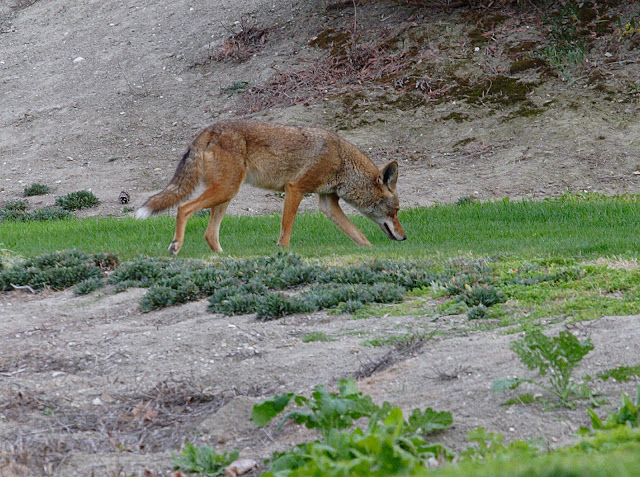
I was abruptly awake, laying there wondering what had waken me.  My husband asked "did you hear that?"  Then I heard it off in the distance, perhaps a block away on the next street down from us, a coyote.  There is no mistaking the high pitched yelping of a coyote in the cold night air.  The sound travels, sending shivers down your spine, only because I know what they are here for.  It was loud and clear in our room as I lay concentrating on the audible sounds as was Luke.  He sat up, his ears raised, listening intently.  It is very clear that this was not the sound of any dog. 


The first thing I thought was "thank goodness we have not given Jessie access to the dog door at night."  Coyotes are common in these areas, I've seen them often.  We've even seen them  midday in the middle of the road and they don't seemed highly bothered by the humans around.  When we first moved to Southern California we were told about the coyotes and that they could easily jump a 6 foot fence.  From that day on Jessie has never been allowed out on her own.  Coyotes regularly eat cats and they also eat dogs when they can get them.  It is typically the small dogs but they will take a larger weaker dog if they are in a pack, scary.

I know of many cats that simply went missing; never to be seen again.  Most people in the area keep their cats inside.  I worry about puppies left outside, when they are young or small they are vulnerable to attack.  Coyotes surely know the where abouts of young, old or sick dogs that they might take.   Walking through the park with the dogs I often come across remains, mostly rabbits but not always.  Leaving small, old or young dogs out overnight is risking the life of your dog.  Aside from coyotes no dog should be sleeping outside, they all deserve to be inside with the family.

Coyotes have lived here a longtime, it is their right and we have to modify our lives to coexist.  It is as simple as that and if you are very cautious about your dogs safety we can all live happily together.  I was told by a woman one day as we chatted about our similar looking Jack Russells that she'd had a tug of war with her little dog and a coyote.  She was at the park, her dog was on an extension leash and as the dog went over a hill the coyote was waiting on the otherside.  It was only because of the fact that she had a leash on her dog that she got it back, but the coyote had not given up easily.  They'd struggled back and forth but the woman was not letting the coyote take her dog.  It finally dropped it and ran off.  Another couple I knew had their very old Brittany Spaniel sleeping outdoors at night, a pack of coyotes entered their yard and took her.  This is horrifically sad and avoidable. 


Several years ago I was doing a photo shoot with a couple of gorgeous Kuvasz.  I was looking for a very intense look that these dogs can possess.  They are a natural guarding breed often used to keep coyotes and wolves away from their flocks.  During the shoot we worked hard to obtain this "look," when suddenly a coyote showed up at the field.  The intense expression on their faces showed that they knew this was not just a dog in the field.  It was amazing and I was able to get the "look" shot which made the cover of Dog World magazine.  It was a very cool moment.


As I lay there listening to the coyote communicating to others I thought "pretty impressive that there are wild coyotes here in Southern California."  Pretty cool indeed. 


Spoiled


I was in a discount store the other day; of course I was in the dog section checking out the goods for my dogs.  Beside me was a woman with a handful of dog stuff, a jacket, a few toys etc.  As I rummaged through everything I overheard a discussion that is quite common.  First the kids arrived to see what Mom was getting for the dog.  Perhaps they had a new dog at home?  Not sure, but they for sure had someone that was very special and needing a new coat and some toys.  The daughter asked if she could get a few different items for the dog which Mom said "no" on.  I had a really cool coat (which unfortunately they didn't have Tilley's size) in my hand when Dad showed up on the scene. 

Everything changed in an instant, what had been excitement and fun soon turned into a convincing job.  "Why do we have to spoil the dog?"  This was all he had to offer.  I hate that word "spoil," it has such a negative connotation to it, doesn't it?  He repeated it again "why do we have to spoil the dog?"  No answer came, Mom and the kids continued their search for a new coat and toys for "the dog."

Spoiled:    to impair, damage, or harm the character or nature of (someone) by unwise treatment, excessive indulgence, etc

And this is exactly what it means to me; over indulgence.  Now that can mean either too much behavior indulgence or indulgence in the form of treats.  Either way the result is not good, spoiled is not a good thing.  Most times when I hear the word "spoiled" when referring to a dog it means "much loved."  Most dogs who are taken care of, loved, and have a great family are often called spoiled?  Is a dog who has a comfortable place to lay, two healthy meals a day and a loving family spoiled?  Not in my books, they are cared for properly.  

Many people throw the word "spoiled" around loosely.  But if you asked them what they really mean by their label of a spoiled dog it would probably not be a negative.  I have met spoiled dogs; those who have been unruly, untrained and badly mannered brought on simply by being overindulged by their guardians.  But when I see a dog wrapped in a blanket on a cold night, sleeping on top of a comfy bed or wearing a new coat to keep them warm, "spoiled" never comes to mind.  A dog that has an amazing nutritional diet, healthy snacks and clean water I never think "what a spoiled dog."  On the contrary, I think "what a great canine guardian." 


For me "spoiled" means getting things that you don't deserve.  Don't all of our dogs deserve to be taken care of to the best of our ability?  I think so.  Let's trash this out dated "spoiled" word. 

Happy New Year


Here we are 2011 already, seems impossible.  I want to wish all of you the best year, happiness, health and success.   I am hoping that this year will see a drop in the number of homeless pets, an end to Puppy mills, and more focus put the way that we humans treat dogs and animals in general.   If we all give just a little, imagine the good that can be done.  It takes but one to start change.

Happy New Year all.  Hugs to all the dogs out there.