What are you saying?


 For almost 15 years I've been teaching people to train their dogs; but I've been watching people train their dogs for over 35 years.  I started training at the age of 13; watching people do it right and do it wrong.  Seeing frustration level grow between both human and canine I can usually put a finger on the problem.  I remember sitting in on several obedience classes in the past; I watched the trainer put the teams through their paces and cringed at a lot of what I saw, miscommunication.

As humans we tend to flap around a lot we move our body parts here and there.  If you've ever watched a human and dog team work where it looks like there are no commands being given you will understand how must wasted signs we give.  Dogs learn the tiniest of signals; it is truly amazing.  Each fraction of a body movement can be used as a cue for a behavior.

Let's take down for example, typically a hand motion over the dogs head height then going down to the ground.  Add into that a leaning forward, head tilt and over exaggerated arm motion from the human.  The dog becomes accustom to having all of these put together equaling the cue for "down."  So when you simply stand offering no other cues except for the hand signal they sit looking at you like "what?"  You think they are defying you when in fact you are not giving them the normal cues.

Paying attention to your entire body can be difficult on your own and is usually helped along by having someone else watch.  I remember watching a "stay" exercise at another trainers class.  One dog and human team was having a really difficult time of it.  The dog was brought to the other side of the class; given the stay signal and the owner walked to the other side of the class.  This is where it fell apart; the owner kept waving her arms around talking to the dog, you could clearly see the confusion in the dogs face.  Being that it was not my class I had to keep my mouth shut but offered a few pointers after class.

One signal means just that, no body lean, head tilt, mouth motion, leg bend or arm wave added to it.  Check yourself, when you are speaking to your dog with your body are you being clear?
Care; real care


Today's blog is sort of a continuation of a previous blog, the one linked below.  So if you haven't read that one you might want to do that now before moving on.

Looking for a great vet

Tilley has not been herself since the visit to the facility in the above blog.  A couple of days after our visit we got a call from another vet from the same facility who gave us the blood work results.  Nothing out of the ordinary, WBC (white blood count) a bit high but nothing to be concerned about.  Great, Tilley's healthy, right?  Hmmmm.

So; three weeks after our visit I get an email from the original Veterinarian that I saw with Tilley asking me to not return, that's right.  Never in my life have I been asked not to return anywhere let alone a veterinarian facility.  The reason seemed to be the protocol; of course!!!! I'd asked too many questions, pushed the envelope by asking to hold my own dog and be present for a blood draw, what was I thinking?  (yes sarcasm)   What I was thinking was that this was a new vet; this was my dog and I was not about to hand her over to any strangers.  I've been through this many times; asking vets if I can stay, if I can hold etc etc.  But once they realized that I was more than capable and was not going to faint at the sight of blood or worse they obliged and even put it in my file.  "Owner stays with dogs."

Can you even imagine being asked not to return to a vet?  I'd not even been given a phone call; it was in the form of an email.  Ah yes a paper trail, more protocol.  I had not yelled, pulled a fit, nothing.  I had simply asked some in-depth questions about procedure and asked to be with my dog, not a great deal to ask.  So my insistence to be with my dog got me and my dogs ousted.  Protocol over care, not a warm and fuzzy caring feeling about a vet that makes this choice.  There was no care about my dog and her health; just that I had pushed their protocol buttons.    The only good thing about the email that came from Alicia Pet Care was that they had sent the blood and urine analysis results along with it.

SOMEONE PLEASE TELL ME WHAT HAPPENED TO ALL THE JAMES HERRIOTS IN THE WORLD?

Today Tilley was exhibiting very clear bladder infection symptoms.  She'd peed fifty times within and hour; so I had to find a vet.  I found one close to me and they squeezed me in after telling them that Tilley was panting in pain.  If you've ever had a bladder infection you undoubtedly understand.  I brought along her blood and urine analysis from the other vet just in case.  When we arrived we had a small wait and were seen.  Tilley was weighed and had her temperature taken which was 101.9, good.

As soon as the vet came in and met Tilley he got to the blood results of the panel.  He quickly circled the results which were marked (HIGH) and explained each one.  He said that this was definitely a worry and that something was going on with her.  The other vet had dismissed the results as a bit of stress and had only mentioned one of the FIVE (HIGH) results as being slightly elevated and nothing to worry about.  All I could think was thank goodness I was forced to go somewhere else.

Just as I am always explaining that each and every dog is an individual; so too are the owners attached to those dogs.  There are many people who walk into a vet and simply hand over their dog; they want nothing to do with maintenance or upkeep.  I understand that and it is wonderful that these people can just turn their dogs over to be cared for.  But that is not me; I am about as hands on as you get, I do everything and nothing makes me queezy  or grossed out.  I am very interested in it all and if I don't know something about an illness that one of my own dogs or a friends dog has, I dive into a ton of research to find out.


This whole experience has left me very bitter; mostly because there was a lack of caring for my dog, Tilley.  She doesn't deserve the whole "Corporate America" routine; no she deserves the care and concern from a veterinarian who became a vet to help animals.   Another life lesson I could have done without but each and everyone has had a part in making me who I am today and I am my dog's Mom.


I want that one


"I want that one, the one with the half and half colored face."  Yep; that old awwwwwwwwwwww factor that gets so many of we humans into trouble.  Being that it seems to be puppy season at the moment; I don't know how many people I know with litters, new puppies, expectant puppy owners and lots of puppies filling up the rescue but that awwwww factor has come up again because of it.  It is that tweak that gets you when you see an adorable puppy or when you look into the yes of the one that seems to want you as much as you want them.  But is love at first sight the way to go?

NO!!!!!!!!!!!!!!

As many of you know, temperament testing is one of the services that I offer as a long time dog trainer and behavior specialist.  I test puppies at the age of 7 weeks to see where they would best flourish and with who in their new home.  Temperament testing has nothing to do with breed or mix and can be done on all puppies.  I know many rescue groups who do temperament testing which is really great; it can only help to match dog and owner.  Of course there are lots of breeders who don't temperament test and that is fine as long as they are placing puppies in the homes of the family who best suits their temperament type.


There are also breeders who place puppies by allowing owners to spend time with the puppies and choose who they like.  This of course can work but it can also go very wrong.  Puppies can be sleepy, they have different moods and act very different than they do with their litter mates than all on their own.  The most pushy pants in the litter might be the most meek and fearful once taken away from her gang.  Brought into a strange environment with only a stranger to interact with tells you a great deal of information about each puppy as an individual.


Choosing puppies before the age of 7 weeks whether they are being temperament tested or not is also not a good idea.  Many people pick their puppy out strictly from looks and have absolutely no idea about the temperament of that dog.  It could be the worst choice out of the litter for their particular family.  Often a litter is very similar so then a breeder allows the prospective puppy owner to choose out of several dogs.  Although not all litters are similar and I have tested a few litters who had puppies from each end of the spectrum.  Put a pushy head strong puppy with an inexperienced family with young children and you can have a recipe for disaster.  Just like putting a meek and cautious puppy into a home that expects a high performance active and outgoing dogs; bad combination.

Taking puppies out of their "comfort zone" and putting them through several tests to see how they deal is very helpful.  I've been lucky to see some of the dogs that I tested at seven weeks of age after they were all grown up.  They were the dogs that I thought they were when I tested them.  That said of course environment has a huge part to play on a how a puppy turns out.  Experience of owners, time spent on training and behavior modification, socializing and living within the family all factor in on the end result, your dog.

Puppies can be secured by a deposit; not a particular puppy, just a puppy at a very young age.  Then once they are tested or at least 6-7 weeks old a breeder or foster can evaluate and place puppies accordingly.

Why not give each puppy the best chance to succeed in their new home?  Doing anything less just doesn't make sense.

Sunday morning


I fell asleep last night to the sounds of Tilley snoring; she'd drifted off to a very deep sleep quickly, old dogs can certainly sleep.   Luke was on the end of the bed as usual twitching away in his dreams; I've never met a dog who dreams as much as Luke.  He is fully awake and the next moment deep in sleep chasing down some prey.  Last night was a great sleep night; the breeze coming in and no one stirred, except for this morning.


The door burst open as a speeding Jack Russell bolted through it and into the room; we're not sleeping anymore.  It was Jessie's typical morning routine; out for a first pee then charge back into the house like a Tasmanian devil.  Luke, Tilley and I all were rudely awaken by her crazed flying around the room with treat anticipation.  She is awaiting the ritualistic morning treat and she is not into passively waiting.  I groggily get up and grab the cheerio bag, multigrain  cheerios that is and toss a handful around the room.  This action stops her charging as she re-directs her attention immediately to the task at hand; snorfling the food off the floor.

I gave Tilley and handful of cheerios as well; she loves them.  It is amazing that after this many years she still likes these plain little o's.  Cheerios are what I start my puppies out on as training treats for the simple things.  There was a big span of time when there were no cheerios but I've discovered that it's a great thing to chuck on the floor for Jessie in the morning.  Luke will have none of it; he doesn't eat cheerios, after all he is a lover of good food and these little rings of nothing are just that, nothing to him.

Then Dad arrives with breakfast, yes breakfast in bed.  Sausages and cheese; now Luke is awake.  I toss him a couple of pieces of cheese at the end of the bed and being that I am not a good aim they fall about a foot from his face.  He's not affording any energy to stretching out for a piece of cheese.  Then I toss him a sausage; oh yes, he'll stretch for sausage.  But as I toss another piece to him it lands about 1.5 feet; too much energy needed for that stretch and he waits for Dad to get it.


Tilley, Jessie and Luke all have their share of sausage and cheese and now its back to sleep time.  Soon we'll be back from the gym and it will be walk time; or for Tilley and Jessie I should say crawl time.  After our morning walk we will have a house filled with the sounds of silence; three old dogs snoring their day away.  Nice.

Leash aggression - again


Leash aggression is probably one of the most common behavior issues.  Yesterday my husband came home and said "Luke went after a dog today."  He'd been on leash at the time and a guy with a very unruly lab came over to say hi.  Unfortunately the dog was dragging the guy over to Luke; you know the out of control type?  The dog was pulling and panting, straight at Luke.   The straight part was the dogs first mistake, rude, rude, rude.  Some dogs just have no manners and to display over enthusiasm along with a straight approach is just asking to be disciplined.

Luke is a very mature dog; and because of this has little patience for nonsense, much like most very mature dogs.    He gets along very well with most dogs but if he sees that a dog is going to need some fine tuning he is up for the job.  There was a lot of noise and the guy realized that he should probably pull his dog away.  There was no contact just noise as Luke tried to school this hooligan.  I love labs, they are wonderful dogs but they do tend to be a breed that doesn't much care if someone disciplines them.  That is good and bad; bad because they can get into quite a bit more trouble because they aren't phased by discipline and don't listen, and good because they aren't traumatized by it.

How many times has your dog gone off on another dog for no reason?  No reason that we can see but for your dog there was a reason.  When we leash our dogs we immediately take away their freedom of speech so to speak.  We humans tend to tighten up on a leash when we see another dog coming.  This alone can start the ball rolling.  Pulling the dog in close may kick the guarding mode into gear as well as cause anxiety due to loss of mobility.  Many times we pull back on our dog which creates a dominant posture on our dog even when they may not be trying to display dominance.  It can all be a misunderstanding; one that can be avoided by space and calm.

Space gives us the ability to NOT tense up on the leash and calm gives off a "we don't care about other dogs," vibe to our dogs.  If your dog is pretty reliable in displaying leash aggression, then give yourself more space between you and the other dog and owner.  Keep upbeat and happy, don't go into panic mode.  Much of the leash aggression problems that are out there are caused by the owner doing everything wrong.

One very important factor in leash aggression is to know that your dog is safely secure on their leash.  If you are afraid that perhaps your dog will slip their collar then fix it now.  Get a collar or better a harness, that your dog will not be able to get out of.  Once you know that your dog is not going anywhere; that itself can be a huge relief.  Get a pile of yummy treats to bring on walks with you and treat like crazy for good behavior.  Even if you are 100 feet or more away from another dog and your dog does not display, treat, treat, treat.

Even with all the work, all the training and behavior modification there may still be times when it happens.  Dogs are not robots, they have emotions and they display them.  You are not alone, most dogs display leash aggression at some point.  It does not mean that you have an aggressive dog; it could mean that you are giving off bad messages which is causing the problem.  Or it could mean that a rude dog has approached your dog or simply that your dog did like what another dog had to say.

Space and calm will conquer.

Momma Bear


As I lay in bed this morning I can hear the tell tale sounds of footsteps behind my back fence.  My husband was up first and let Jessie out; she is doing her run around and the sound of her ID tag is obviously stirring some interest from behind.  The dog who is behind my fence is one of the boxer girls that went after Luke about a year ago.  Not friendly in the least.  My protective Mother instinct is kicked into gear and I listen.  The dogs have never cover over the fence, yet.


Protective instinct is strong in many of us and I for one am like a Mother Grizzly should you happen to cross one of my family members and that includes my dogs.  When my guys were all young I was protective, always watching to see who was coming but now I'm on overdrive.  One wrong bump could be all that it takes to break a leg or worse.

We have had several incidents over the years that sort of make you very cautious.  A charging and or raging dog is no fun for anyone and we've had to deal with a few.  The first was a dog that ran out of an open garage door as we walked by; it latched onto my Airedale and shook her like a rag doll.  Another was a dog who continually charged us coming out of her garage door as we walked by; this dog was eventually euthanized due to biting several people.  There was the dog that went after Tilley just a few weeks ago.  A 4 month old puppy that went charged after Jessie; it was twice her size and grabbed hold of her neck and wouldn't let go.  There have been others but these are the few that come to mind earlier this morning.


All it takes is one incident like any of these to pop you into protection mode.  It is always good to be aware of your surroundings; including when you are out with your dog.  You can much better deal with an issue when you know it's coming versus being startled by it.  It's our job to protect our dogs; I take my job seriously so the sounds of our not friendly neighbor taking interest in Jessie's tags has me up and at it and out to check on the perimeter.

Splashing around


Bombs away; "just toss'm in, they know how to swim." Many people figure that dogs are natural born swimmers; but that is not always the case and how you approach swimming and the water can make or break a great swimmer. I remember an incident years and years ago; a guy who had just added an adorable 6 week old Airedale puppy to his family tossed her off a raft. She immediately sunk and then came up splashing and panicking. He had to eventually scoop her up to save her and when she got her paws on the sand she ran for the hills. I can't say that I blame her; what an idiotic thing to do, honestly.


Most dogs of course can swim; but many need help. They are by far much better than us at adapting quickly but if they are not introduced to swimming at a young age and in a gentle manner; things can go very wrong. I have made numerous attempts at teaching Luke to swim; not an easy task. He is a very nervous type so he tightens up and stresses. Unfortunately we don't have a lake here to practice in; we only have the southern California coast which has fairly big and ominous waves. These waves will pick you up and toss you upside down so teaching a dog to swim in them is out of the question; unless they are fearless, a lab or golden.

I've seen many dogs charge into the water without ever being in it before. They dive in head first; spit and sputter and eventually get it. while nearly drowning in the process. But they find their way and become official water dogs. But for a great majority of dogs; they need our assistance, water can be very confusing. Walking in the water is great; lots of dogs love it. But take the ground away and they panic; they reach down hoping to catch a toe on a piece of ground beneath them. As they reach further and further down they become vertical; not a great position to swim in. Then comes the frantic splashing; of course they will panic, they're sinking.


Turns out that I eventually ended up with that Airedale who was tossed into the water at 6 weeks of age. And I had to teach her to swim; being an Airedale she was a natural water dog but had no idea how to swim. She never found her way on her own and would simply sink as she was reaching for the ground. You must take great care when you are around any dog in the water; even the best of swimmers will try to use you as a floatation device at times and you can get injured as they attempt to climb you. So; in water deep enough to swim in you must hold up their rear end; it is not an easy task. With my Airedale gal I simply held her tail; she was very buoyant so this was all it took to keep her afloat. Their legs are naturally swimming so once they start to propel themselves; they pretty much take over. The trick is to create a calm atmosphere; otherwise they cannot even think. Mandy (the Airedale) actually turned into one of the most amazing swimmers I've ever met. She would go into the water and come back in an hour; she loved it and would dive deep under the water to pull out boulder sized rocks, she was an amazing dog.

Other dogs need a bit more; a lift from beneath, something to stop them from sinking in the rear. Often just barely holding them under the chest and lightly moving them about to get them moving on their own. Many people use life vests for dogs. This of course is a great thing to use when on boats with your dog and a must for many of the shorter legged dogs. But using it to teach swimming can be both good and bad. If you use it for just the introduction it may be good; a few days of floating and then take it off. Unfortunately many dogs will end up back at square one once you take it off. You have given them a false sense of swimming and now they think it is easy peasy when the realization "sinks" in.

Tilley had the luxury of learning to swim in lakes; she did it herself mostly. A couple of helping lifts and she was on her way. She loves to swim; dive and go under. My son and I use to get out our masks and watch Tilley go under water for her toys that had sunk to the bottom of the pool. How I wish I had an underwater camera back then. Watching her teach herself to hold her breath was amazing. Luke has done the same; albeit from the safety of land. He puts his head underwater to get his toys from his kiddie pool. It took him a couple of tries before realizing that you cannot smell the toys under the water. Watching the process of the breath holding is amazing; it is done fairly quickly. From water up the nose to whole head submersion in a matter of minutes.

Be safe around water; dogs do drown.  If you have a dog that has shorter legs take extra precautions.  Many cannot swim at all and simply sink.  Pools are very dangerous with dogs; even the best swimmer can drown if they cannot get out of the pool.  Teach your dog how to exit the pool "in case" there should ever be a need.  And always supervise swimming activities. 

Patience is the best line of attack for teaching your dog to swim; make it fun. Never push; pushing causes all sorts of issues; one is pushing back.  The harder you push the harder your dog pushes back. You want your dog to trust you; trust is all important with dogs. And if they simply are not interested after all your fun attempts to get them into the water; maybe they'll love Frisbee, flyball, agility or going for a bike ride.

Kyjen Pet Saver Life Vest Jacket for Dogs

Toxic molds


Mold is not just mold.


A vast array of molds pop up and grow on all types of foods.  Some of the molds are harmless but a few can be toxic called tremorgenic mycotoxins which if eaten can cause serious to life threatening health issues.  You cannot discern whether or not a mold is toxic or not so the safest bet is to toss it.  I remember joining a canine food co-op a while back and after hearing what everyone was feeding their dogs, I made a rapid exit. Some of the folks were feeding moldy, processed, nitrate filled and high fat content food.  Sure it was free but should it have been fed to their dogs?  There are things that I'll never eat but my dogs will and love.  Items like  sinew, cartilage, sardines and other animal parts that I will never eat, but are really great to feed dogs.   But garbage is garbage and should not be fed to dogs.

Tremorgenic mycotoxin poisoning symptoms start with mild tremors and may increase with time to convulsions.  In severe cases it can lead to death; so time is of the essence.  There is no safe way to treat this at home; even inducing vomiting is risky as the dog may in fact aspirate vomit causing aspiration pneumonia which is a common secondary cause of death related to tremorgenic mycotoxin poisoning. 

Compost eating is a common cause of tremorgenic mycotoxin poisoning.   We all know that many dogs are garbage hounds and a bit of mold will not deter them from eating a perfectly good (in their mind) piece of food.  Compost bins need to be kept secure with no way for a dog to get in and eat the contents. 


Of course this is not only a compost issue; it can be garbage from anywhere so cans are off limits as well.  Unfortunately dogs tend to be much smarter than the humans in the this department; simply waiting until no one is around.  So if your dog is outsmarting you with regards to the garbage can you need to make sure that they absolutely cannot get into it.  One moldy piece of food could be all that it takes for serious health issues to set in.  

Several articles on the subject below: 

Molly's compost binge


Beauregard's tremors


Compost poisoning

Lack of diagnosis to the root cause of tremors and seizures is common; so too are Tremorgenic mycotoxin bacteria.  How many dogs have eaten these bacteria; had tremors, a seizure and died?  

Toxic algae


There is nothing better than finding a spot where you and your dog/dogs can spend the afternoon swimming.  Away from all the crowds you know of a place where there is a great little pond.  But that pond may hold a toxic substance dangers to humans but more so for your dog.

I remember several years back hearing of a couple of canine deaths caused by algae.  Being that it is mid summer and the temperatures are rising I felt that I should give everyone a heads up.  We use to run our dogs in a creek not too far from our house.  It would go from deep and raging for months after the rainy season to a mere trickle at dryer times.  After hearing about the algae deaths we stopped allowing them to run in the water all together.

Not all algae is bad but the blue green type can become toxic in the warmer weather.  As the water levels drop and the temperatures rise a toxic potion can result.  Many people who commonly swim their dogs in fresh water need to be aware of the dangers.   Not all blue green algae is blue or green, it can be shades of brown, red or orange as well.  Sitting water or stagnant ponds are the worst.  Below are several articles on the subject; please take care.  

Pet connection

VT Vet

Algae

The news guard

Sherri in Just dogs


I'm thinking that many of you may be new readers so I thought that I would introduce myself to you.  That or at least give you  a little insight as to who is behind "Just dogs with Sherri."  I love writing about dogs; heck I love doing anything concerning dogs and I love nothing more than hearing feedback from you, my readers.  There is a comment section at the bottom of each blog; love to hear from you.

It all started for me at the young age of 13; I was handed a leash and the rest is history.  My show handling was mostly self taught through trial and error; but I did have the priviledge of receiving much knowledge from the renowned Marth Covington Thorne in Canada. I remember the day Martha said to me "young lady, never stop handling; the show world needs handlers like you," as if it was yesterday as she handed me my huge trophy. I started out in the conformation ring as a Junior handler and moved up to handling breeds of all kinds. Some of the breeds that stand out isn my memory are Dobermans of course, which was the dog that started it all. Airedales, Irish Deerhounds, Irish Terriers, Mastiff, Bull Terriers, Great Pyreneese, Shelties and of course Standard Poodles.

During my show years I was also active in obedience training. This was where I learned the conventional choke collar methods of training. I am not proud of training dogs like this but when I was 13, way back then; there was no other way. I never had fun training my dogs with this method and as soon as I learned of positive reinforcement training everything changed. I never looked back but I am happy that I have the conventional experiences. This gives me an insight into this type of training, the mind set and reason why I never use it.  It is all a part of the evolution; one of the pieces of who I am today.

I gave up the show ring shortly after the birth of my first daughter; I put all my energy into being a Mom in a small town. As my children grew into their pre-teen years I became a well known baker in the area. I attended a weekly farmers market where I was quickly dubbed the "cookie lady." I also supplied a local restaurant with an array of cheesecakes which I have won many prizes for.  During those years I was also involved with my dogs and did my own training and much hiking and other dog/human sports.

From baking I went back to the dogs as a Pet sitter. I loved spending the time while my children were in school just chill'n with lots of dogs. It is very rewarding walking and playing with dogs who spend their long days alone because their guardians worked all day. This was not a long gig as we were soon to move to California; so I gave up the dog walking and focused on the move.  Once here in California I met and worked with another dog trainer and not long after that I became a private in-home dog trainer myself.  Having years of experience behind me it was an easy transition.  I loved it; for almost 15 years I have got to meet some amazing dogs and their guardians.   

My specialty in dog training is behavior modification through positive reinforcement, focusing on living with our dogs in the best way possible.  I love working with dogs and their guardians; helping them to come together, living life as smoothly as humans and dogs can.  I have worked with everything from the tiniest little pocket pooches up to the giant Irish Wolfhounds and Great Danes.  Each one was interesting and exciting in their own way and all play a part in life with dogs.  

I started dabbling in photography and quickly discovered that this was yet another branch about to evolve.  I am a freelance photographer with a preference for dogs.  I do love photography in general but my camera is never far from a dog.  I shoot for many of the big dog magazines and do private work.  I love it all, capturing the very essence of a dog brings me great happiness.  Having the opportunity to meet so many wonderful people and amazing dogs is truly a dream come true.

Throughout my years of training I have written and had many articles published. I have two books self published; many calendars, articles and photos published.  I'm hoping to finish up my first training book very soon and others will follow.  I am also working on a gorgeous coffee table book right now which has been a work in progress for several years now.  As I always say, "life is an evolution of oneself,"  this has been mine in a nutshell.  


Interference


Good Sunday morning; I hope you are all having a wonderful weekend.  I woke up to rain, yes rain in Southern California.  I checked the weather forecast just yesterday and there was no hint of rain on it but we surely need it.  So it's a nice change and I welcome a rainy day.

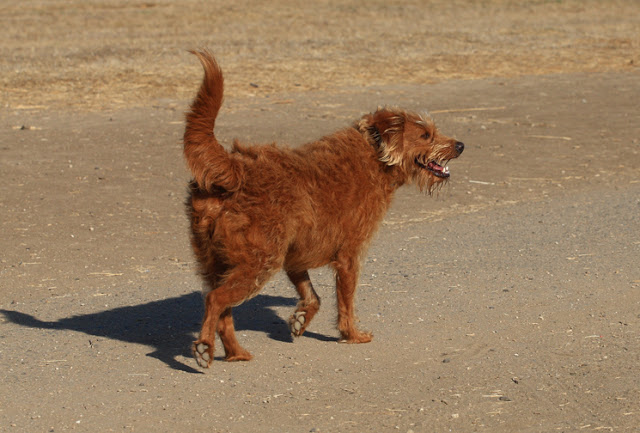
I started going through some images from a shoot the other day and laughed when I saw a few of them.  We had some interference during the shoot; not bad interference just interference.  I met several people at the park and there dogs to the photo shoot.  I was there about 15 min. early and watched a scruffy dog running around the park and checking up on all the dogs who passed by.  The bristle coated red dog was there with his girl; a little girl who was learning to ride a bike and as owner ran along side the little girl, so did the dog.  Only the appearance of another dog on the scene veered him from his duty.

As soon my dogs arrived so did the scruffy one; he came over immediately to assess the situation.  He met all the dogs; had a little romp and then was off with his little girl again.  During the shoot he came over once again to check out the situation; he had another greeting, made sure that all was well and was on his way once a gain.  Sometimes a dog on the scene of a shoot is a great thing; they can often be all that is needed to get an intense look that only dogs on high alert can give you.  If the dog that I am shooting in on leash then I can often capture the piercing desire to go to the other dog.


As a long time dog trainer I love nothing more than capturing canine behavior so when we do have the occasional appearance of another dog on the scene I surely take the opportunity to use it.  This boy appeared from the bushes; had a quick hello to this beautiful gal and was on his way with his owner who beckoned him on his bike as he drove by.

Interference is not always a bad thing.

That touch thing


I just finished giving Luke a massage; I regularly massage all three but I tend to focus on Luke the most.  For you long time readers; you all know he is a nervous ninny and a thorough massage does him good.  First he worries what I am doing; then he worries about why I am pushing him over.  Next he worries about why I am not letting him get up; all the while I am staying as cool as a cucumber.  He looks at me and sniffs to test my mood; then he relaxes.  He is much better than he use to be; after ten years he actually trusts me and really enjoys his massage, once we are into it.  How do I know he enjoys it?  He gets his googly eyes on; his eyes half shut and his third eyelid half up. 

Massaging your dog is not only beneficial for them; it is also great for lowering your blood pressure or destressing from a bad day.  The moment I start rubbing I can feel the stress leave my body.  Most dogs learn to love it if they don't from the start.  Many dogs are not the touchy feely type and need to learn to enjoy a massage.  But even if a dog enjoys a massage from you; they may not enjoy receiving the same treatment from a non family member.  None of my dogs would appreciate someone pawing all over them; it would be in itself, a stressful event.  So keep that in mind.  Several years back I talked to a gentleman who was offering Reiki for animals.  I understand the basic idea behind reiki and asked if there was a need for touch while doing it?  He assured me that no touch was needed; although if an animal enjoys it, they may touch. 

Massage not only feels good; it is very relaxing.  So relaxing that 5 min. after our session Luke remained on the couch as I vacuumed around him; something he never does.  Normally; as soon as I head his way he's gone, this was very interesting, he even had his eyes closed as I approached.  Massaging your dog regularly is a very good way for bonding time; it builds trust and helps dogs get over their touch issues.  I've worked with many dogs that cannot be touched in certain areas.  Owners say to me "oh ya very friendly, just don't touch his stomach," or "just don't touch his feet."  You should be able to touch everything; even their feet which is the most common issue.  Most dogs recoil when you touch their feet; even if they don't mind a whole lot. 

You must start slowly; and if they have any reservations about the process, add yummy treats into the mix.  Ah; good treats appear when the touching begins, your dog will soon look forward to the touching session.  Then once they are accepting the gentle massaging; you can slowly eliminate the treats.  When you massage you should have a firm but gentle touch; keep your hands flat on your dog, no digging fingers.  Keep one hand on the dog at all times; removing one if the other remains.  This helps to eliminate the startle factor; I learned this by getting my own massages.

Massage everything; spine, legs, tail, feet, ears, toes etc.  Luke loves a good face massage; he is particular about it but it is probably his favorite, the googly eyes come out bigtime for a face rub.  When you move; think "zen."  Pick up each foot gently and return it to the ground as if it is made of something very breakable.  But firm with your touch; you don't want to freak out your dog by acting apprehensive.  Canine massage should be short and sweet; unless of course you have one that slips into a coma from a massage...........then time may be limitless.  But my motto in life is quite while you're ahead. 

On the road again


We're back on the road again; after being hit with a new wrench we are again a fine tuned machine.  I'm talking about Jessie's dementia which certainly threw our day to day for a loop to say the least.

Two previous dementia blogs.

Dementia #1

Dementia #2

Our pack is a fabulous one; has been for nearly 11 years now.  Sure we've had our ups and downs; trials and tribulations but generally we're in order.  So when Jessie was hit with dementia sometime around December 2010, everything was a mess for a while.  But I'm happy to say we are back on the road again.

I like when everything is running smoothly; but as life has a habit of doing, things can go from good to bad quickly.  So over the last several months of learning and readjusting we are pretty much there.  We've got a routine again; a loose routine of course as I'm not much of a routine person.  Jessie seems to be very comfortable with everything day to day with everything falling into place.

She's a funny little thing and often has me smiling simply because of her gusto for life.  She's 15.5 years old and for a small very fit and muscular girl is nothin; but her lack of vision, hearing and now dementia has just made things interesting.  :)  Her range of motion goes from nil to 100 miles an hour in a matter of seconds.  She sleeps in her crate at night which is essential as her symptoms start around 2:00 am and I need my sleep.  She paces and pushes to get out of her crate until we are up about 5:00am.

Once out she is like a torpedo and I'm not joking; I'm going to try to video her for you this weekend.  She races around the backyard like a crazy person (okay she actually is a crazy dog).  The goal is for her to pee and she knows it; once she goes she can come in.  She charges into the kitchen, around the corner and up the stairs like she has been shot out of a cannon.  The goal?  The morning treat.  Once she's had that she wanders around; goes out the dog door several times and then joins Tilley on her dog bed.  That is where she is at the moment.

The speed starts once again if she is going for a walk; she hurls her little body everywhere at such a speed that I can barely get her harness onto her.  She does these amazingly huge loud yawns when she is happy and/or excited so that goes on until we get to the park.  There she again bursts out of the car and we are on our way.  Somewhere in the middle of our walk she starts to slowdown until she is at a snail pace; often needing a lift the final steps to the car.

We have a bit more excitement during breakfast feeding time and then it is full blown shutdown.  Sleep fills the rest of the day until it's feeding time again.  It amazes me that she is up and alert around 6:00pm, no matter what I'm doing or where I am something in her body says food time.  She hurls her little body around with sheer delight over dinner time and then its shutdown again.

We put her to bed and it starts all over again.  I have a highly changing life day to day but she is pretty much set in this routine which is definitely a good thing for all.  Working around it took a while but now we are all happily back on the road again.

The Begging dog


Good morning; begging came to mind this morning with all the yummy food that is starting to be prepared and consumed this holiday season. And the fact that I had quite a begging situation lastnight. So how bad is begging and how far should it be allowed to progress or encroach?  Begging is a very natural behavior for dogs. Watch any documentary on wolves and you will see the exact same behavior within a pack. Begging goes as far as the "alpha" wolves will allow it. The act of begging is how a dog asks for the food that you are at the moment; eating. Begging in general is not a bad behavior; infact I consider it to be quite an amazing behavior.

Most trainers think of begging as simply unacceptable; but how well mannered is a dog that sits and watches you consume a delicious meal without attempting to remove it from you? I think it is a very controlled behavior when a dog can accomplish this; especially if they are drooling at the sametime.


When it is not acceptable is when they do attempt to take your food from you; whether by charm or cheer force. Dogs who try to take food from you forcefully by grabbing or jumping probably lack manners in all aspects of their life. Training and rule enforcement is a must to get this under control.

Even the ones who sneakily attempt to take your food; inching up on you without notice then ever so slightly moving their head forwards. If you give in at this point you have not only been had but you have just lowered your status within the pack. Eye contact is a great way to let your dog know they are way too close to your food. Moving towards them if eye contact is not enough and when they move back you sit and eat.

It is essential that you should be able to complete a down stay with your dog while you are eating so you know that if you desire this amount of control, you have it. So rethink the whole begging issue; does your dog watch you eat from several feet away? Do their eyes watch every bite you take? Then that's pretty amazing to me. Having them not watch at all is a difficult task and needless in my mind.

Always reward your dog for good behavior, do not give in to those sad eyes moving in on your food or you have been had and out brained by your dog.

Sideways


I got into the car yesterday; put the key in and started her up.  A couple veered behind my xterra with their dog and walked around the car; I thought to myself "remember when?"  What I was remembering was when a direct approach to my car would send Luke into guard mode.  It was fine if someone walked by my car; even within inches was fine but just don't head straight towards it.

A direct approach for a dog is a dominant display; of course you must watch what the body in it's entirety is saying but in general it means dominance.  Depending on who is being approached factors in as well.  If a dog wants to send a neutral or non threatening message to someone or other dog then they approach at an angle.   When non house sibling dogs are out playing you will often see head turns, sideways advances to one another and huge circle approaches.  Often young dogs will also lower their body posture while creating a sideways approach.

This is canine mannerly greeting communications and not all dogs are cued into delivery or reading.  I remember one day way back when Luke was but a young'n and over flowed with enthusiasm.  His zest for greetings got him into trouble quite a few times.  One time in particular was when he saw a white German Shepherd across the field; nothing I could say was going to stop him from going to greet her.  Once he left I stopped calling him and let her do the work; I watched as it unfolded.  It was obvious that she was a very mature and confident female; she stood unimpressed as he ran straight at her, a foolish mistake.  He ran bubbling over with joy until about 20 feet away when he finally noticed her body posture.  He tried his best to jam on the brakes seeing that she was none too impressed with his charging approach, he completely altered his communication.  It quickly changed to a modified circle, head and tail lowered as she then charged him.  He turned on a dime and high tailed it back to Mom, lesson learned.

Body posture, angle, eye position and intensity all factor in with canine communications.  When I meet new dogs I always assume my default position; a non threatening neutral one.  Sideways is a common position for me to be in and it comes as naturally to me as walking.  Unfortunately photographing dogs can be difficult to assume a none threatening body posture but I try; often my camera staring at a dog is very intimidating so I will turn sideways and shoot.

When you meet a strange dog, a dog that is not yours or even your own insecure dog, turn sideways.  Making a direct approach can be interpreted as rude all the way up to scary.  Are you directionally  challenged?  

Sideways


I got into the car yesterday; put the key in and started her up.  A couple started my way and walked around the car; I thought to myself "remember when?"  What I was remembering was when a direct approach to my car would send Luke into guard mode.  It was fine if someone walked by my car; even within inches was fine but just don't head straight towards it.

A direct approach for a dog is a dominant display; of course you must watch what the body in it's entirety is saying but in general it means dominance.  Depending on who is being approached factors in as well.  If a dog wants to send a neutral or non threatening message to someone or some other dog then they approach at an angle.   When non house sibling dogs are out playing you will often see head turns, sideways advances to one another and huge circle approaches.  Often young dogs will also lower their body posture while creating a sideways approach.

This is canine mannerly greeting communications and not all dogs are cued into delivery or reading.  I remember one day way back when Luke was but a young'n and over flowed with enthusiasm.  His zest for greetings got him into trouble quite a few times.  One time in particular he saw a white German Shepherd across the field; nothing I could say was going to stop him from going to greet her.  Once he left I stopped calling him and let her do the work; I watched as it unfolded.  It was obvious that she was a very mature and confident female; she stood unimpressed as he ran straight at her, a foolish mistake.  He ran bubbling over with joy until about 20 feet away when he finally noticed her body posture.  He tried his best to jam on the brakes seeing that she was none too impressed with his charging approach, he completely altered his communication.  It quickly changed to a modified circle, head and tail lowered as she then charged him.  He turned on a dime and high tailed it back to Mom, lesson learned.

Body posture, angle, eye position and intensity all factor in with canine communications.  When I meet new dogs I always assume my default position; a non threatening neutral one.  Sideways is a common position for me to be in and it comes as naturally to me as walking.  Unfortunately photographing dogs can be difficult but I do it; often my camera staring at a dog is very intimidating so I will turn sideways and shoot.

When you meet a strange dog, a dog that is not yours or even your own insecure dog, turn sideways.  Making a direct approach can be interpreted as rude all the way up to scary.  Are you directionally  challenged?  

The orange one


Sunday afternoon; it was hot, so hot that we pretty much hibernated in the house until late afternoon.  Then I decided that some pool fun was in order.   I got out all the floaters and the sinkers.  The balls, the bones and then I remembered seeing Tilley's old floating dumbells when I was cleaning out a closest the other day.  I ran and got them; and started the filling process.  I dumped all the toys into the pool while it was filling; all the floaters spun around the pool as the water rose.  Tilley loved this, it really triggered her drive and she was having a blast chasing them around the pool to retrieve.


Luke wasn't really in the mood except that he had sniffed out a new toy; the orange one.  These toys have strictly been preserved for water use and the chew marks on them have just been from Miss hard mouth Tilley doing her thing.  Luke has never been allowed to play with or chew them so the intrigue was high.  Tilley immediately spotted the dumbells; the orange one and the yellow one.  She obviously preferred retrieving them over everything else; although she still took everything else out of the pool. 


Not Luke he only wanted the dumbells are preferably the orange one.  The yellow one was identical but the same color as the tennis balls so it lacked that something special.  He did retrieve the yellow one a couple of times but the orange one was still "the one" he wanted.


Luke doesn't like to walk in the pool; I think because it is very slippery.  He tries to coax the toys to the edge.


Waiting for Tilley to drop the orange one.


Having a discussion


I decided to put the dumbells away so that they would play with the rest of the toys.  This was the second best and once retrieved from the bottom of the pool shows just how much water a poodle face can hold. 

Bring'm in


If you have a dog that lives in your backyard, you too are missing out on so much. Dogs offer us unquestioned companionship with no boundaries. A dog just wants to spend time with their human. If we can offer our time and add quality in ways of fun activities while spending that time together, bonus. First and foremost, our dogs need our companionship and we need theirs. Making the decision to take the first step is all that it takes.


Taking that first step from having an "outside dog" to an "inside dog" and allowing your dog to live as a true pack member is a big one. Making the transition is a lot of work and takes a great deal of patience. You will need to teach your dog the house rules, no eliminating in the house, no jumping on the table or counters, no eating items that do not belong to you.  Starting out with partitioned areas of the house first and allowing more freedom as your dog adjusts to her new living arrangement is a good idea. Your dog’s excitement level may take a while to diminish, until they start to understand that they now live in the house with the rest of the family. This can be a make or break time, commit to your decision to be patient and help your dog with the adjustment.


There are several things to consider when you decide to make the transition from "yard dog" to family member.


-Decide where your dog will eat, sleep and be allowed. If you don’t want your dog on the couch, beds or certain rooms, start right from the beginning.


-Add new toys to your dogs supply, you will want your dog to have toys that will occupy their time while indoors.


-Supervision is a must for housetraining and house rules


-If you have not trained your dog, start today.  If you have done basic training, do a refresher course. Your dog will have a difficult time performing even the basics when excited by being inside of your home, practice, practice and patience


-Involve the whole family in the exercise of training your dog. Make sure that everyone is on the same track.


-You will want to crate train your dog for when you cannot be around.


-Get some baby gates for partitioning off parts of the house while the training is underway.


-Prepare your family of the impending upheaval that will occur in the first while of the transition. Explain that this will be confusing for your dog as well.


-Address any concerns that your family may have about the dog coming to live inside.


No dog should ever live alone, no matter what breed or mix.


Eye on rescue

I attended an adoption on Saturday held by I.C.A.R.E. dog rescue.    First let me say how inspiring these rescue people are.  Everyone is dedicated to finding these dogs a forever home; not just a home but a great forever home.   Below are some of the dogs that were there; looking for their one and only.   All are looking for a home; if you might be interested in adopting one or two, contact I.C.A.R.E. dog rescue for more details.

The eyes of hope


Buddy


Bo; getting lots of love'n.


Spanky; this adorable boy is 80% blind.


Grace; what a beautiful girl.


This little lady was as cute as they come.


Tinzy


Margarita is a STAR:  She is just back from her work as a body double for the star K9 of a movie coming out featuring Steve Carell.


Freckles; such a sensitive little guy.


Adorable puppies


Fergie


Alvin; how adorable?


Lola; if only they could talk.


Delyla; this girl is adorable and LOVES to swim.


Toodles


Ginger


Cuto; handsome guy.


Star:  new girl on the block.


Titan


Mandy; such a cute little puppy.


My stuff


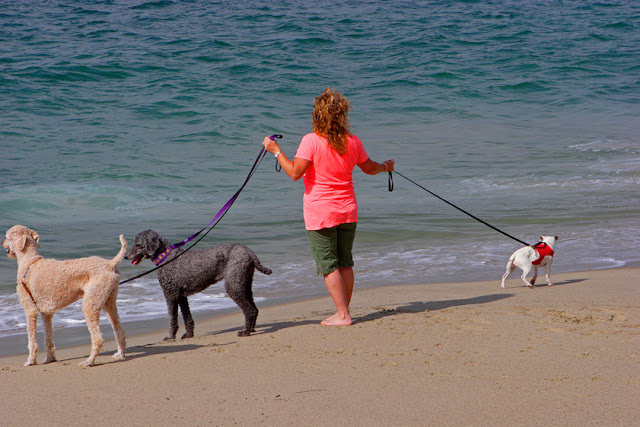
I thought I'd tell you all what I use as far as equipment, bowls, toys etc.  I have to say that I am a minimalist as far as equipment goes for the dogs.  The simpler the better in my books.  I like quality; nothing irks me more than a poorly made product that people are trying to pass off on the unsuspecting dog owner.  Even though I have my favorites I love to try new products and love it even more when I find something that I like.  There are things that I find that I believe would be great for giant or very large breeds and the little pocket pooches.  With a Jack Russell and two standard poodles I'm in the small/medium - medium/large range.  My poodles, although tall are very light weight so I don't need any real heavy gear.

My leash of choice is the simple cotton web lead.  I prefer the 8-10' length because I like that it allows me to let'm roam now and again.  I don't want a leash that keeps a dog by my side and cannot extend out.  I do have a couple of very short leashes for specific times but for the day in and day out I use my 8-10".  I use the 5/8" width and I have both black and red.  The red is by far a better color as it does not get lost as easily in the grass, I'm forever losing my leashes.  The leash is easily gathered up in my hand for when we need a short leash and then I can just let it out again.

Luke wears the Easy Walk Harness by Premier.  I really like it for dogs who like to pull.  He doesn't pull often now but I still really like this harness.  Jessie wears the Yap Wrap that I have tested and reviewed.  I love it for her; it is very comfortable and nice and secure.  It also doubles as a vest to be harnessed and buckled up when in the car.  I would really love to get one for Tilley to help her get around, it has a great handle on the top that I could grab to assist her but it looks like they are only for small dogs.  I'll check it out. 

Tilley wears a slip on greyhound martingale with an attached leash.  I can easily slip it on and off and it is faux fur lined to be extra comfortable for her neck.  I got it at a dog show years ago and love it.  Martingale collars pull over the dogs head and tighten so that it cannot be slipped.  Not that Tilley needs that at all but dogs who might slip their collar are prime candidates for this type.  I like that I can easily slip it over her head and off again. 

Our food bowls are stainless; I have several.  I like to keep at least two bowls for each dog so that they have a clean bowl always.  All the food bowls have non slip bottoms.  I prefer the type that I can throw into the dishwasher.  There are several porceline water bowls around the house.  One in the kitchen, one in the downstairs bathroom and one outside. 

We have a basket full of toys; everything from indestructible to very destructible.  Of course when the dogs are using the rip apart toys they are supervised.  I get most toys at discount stores but again love to try any new toy out that might be a hit with the gang.  I do stay away from rope toys; I do not like how they frey and can be pulled off to edible strings.  We have no string toys.

Beds; as you know, lots of them.  Beds in every room of the house.  I usually purchase them from either Costco or Homegoods/Homesense.  It is essential that they have zippers so that you can remove the casing and wash it.  And they must be good and squishy, no thin beds for my guys.  They get the squish test before purchase.

I buy biodegradable poop bags from several different sources so that I always have a lot.  I prefer the non scented ones; the smell of the scented ones is just a bit too obvious and obnoxious.  Plus my husband hates the scented bags. 

I use a dremel tool for nails and have a box full of grooming equipment for my poodles.  I have a tiny soft baby brush for Jessie who is the one that gets brushed the most as she sheds.  My poodles are shaved down fairly utility like so not much maintenance there other than the initial shave.

Like I said; simple.