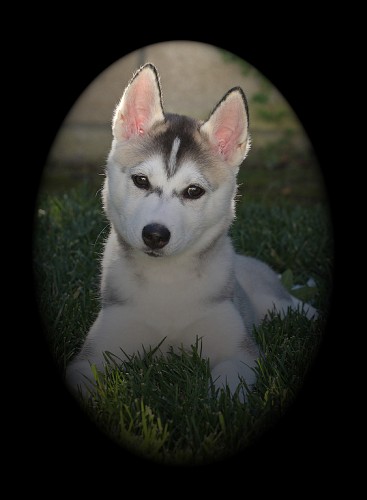
Fear


Fear:  a distressing emotion aroused by impending danger, evil, pain, etc., whether the threat is real or imagined; the feeling or condition of being afraid.

Life can be filled with fear causing objects, situations or events.  How our canines deal with these depends on their past experiences, introduction and watching you.  Often there is a negative association to something; maybe a bad thing happened at the park so your dog is on guard while there.  Perhaps a large man wearing a hat scared your dog so now he is wary of hats and men.  Dealing with fear can be a very sensitive affair; how you undo fear takes time, patience and understanding.

Elements in our daily life can be fearful to dogs whether they are a new puppy or just experiencing for the first time.  Being that I have a new puppy I am dealing with lots of "new" things that Elsa has never seen before.  In fact almost everything she is experiencing is new.  She is very confident and assured; she has feared very few things so far but I'm sure there will be lots to overcome in the near future.  So far she has only been concerned with a little white Bichon, a bench, the birds in a pet store and a very loud siren at a strip mall.

So what do you do if your dog displays fearful behavior?  The first and most important thing is to never force; don't push, pull or cajole.  You need to outwardly ignore the fear, do not feed into it.  Next you need to display your own behavior of carefree and who cares attitude.  For Elsa's fear of the little white fluffy dog which initially surprised me; I simply bent down beside the dog and said hello.  She was bucking at the end of her leash trying to run away but as soon as she saw me saying "hi" she came to see what I was doing.  I was showing her that I was not afraid and that this guy was pretty darned cute.  Within a minute she was jumping on his head.

For the bench that she was afraid of I quietly sat down and put some cheerios on the edge.  Again within a minute she was sitting by my side not giving the bench another thought.  The birds that frightened her were loud and I knew they would be an issue.  So we went into the store and I just let her take it all in.  Her tail went down as she listened intently to the squawking.  After several minutes of letting her see that nothing was happening I asked her for a sit which is about as solid and reliable as it will ever be.  She looked up at me and sat; got her cheerio and we moved on, bird issue gone.

Your own behavior is huge; if you are a true "leader" for your dog then they will always look to you for guidance.  If there is a scary noise in my yard Elsa will look to my big dogs for guidance.  If they are just laying there then she will ignore the noise like they are.  If she is more afraid she will come and sit by me and watch what I am doing.  At that point I usually get up and putter around making it clear that the scary noise is not.

Remember, your dog is always watching you.


Fear


Fear:  a distressing emotion aroused by impending danger, evil, pain, etc., whether the threat is real or imagined; the feeling or condition of being afraid.

Life can be filled with fear causing objects, situations or events.  How our canines deal with these depends on their past experiences, introduction and watching you.  Often there is a negative association to something; maybe a bad thing happened at the park so your dog is on guard while there.  Perhaps a large man wearing a hat scared your dog so now he is wary of hats and men.  Dealing with fear can be a very sensitive affair; how you undo fear takes time, patience and understanding.

Elements in our daily life can be fearful to dogs whether they are a new puppy or just experiencing for the first time.  Being that I have a new puppy I am dealing with lots of "new" things that Elsa has never seen before.  In fact almost everything she is experiencing is new.  She is very confident and assured; she has feared very few things so far but I'm sure there will be lots to overcome in the near future.  So far she has only been concerned with a little white Bichon, a bench, the birds in a pet store and a very loud siren at a strip mall.  

So what do you do if your dog displays fearful behavior?  The first and most important thing is to never force; don't push, pull or cajole.  You need to outwardly ignore the fear, do not feed into it.  Next you need to display your own behavior of carefree and who cares attitude.  For Elsa's fear of the little white fluffy dog which initially surprised me; I simply bent down beside the dog and said hello.  She was bucking at the end of her leash trying to run away but as soon as she saw me saying "hi" she came to see what I was doing.  I was showing her that I was not afraid and that this guy was pretty darned cute.  Within a minute she was jumping on his head.

For the bench that she was afraid of I quietly sat down and put some cheerios on the edge.  Again within a minute she was sitting by my side not giving the bench another thought.  The birds that frightened her were loud and I knew they would be an issue.  So we went into the store and I just let her take it all in.  Her tail went down as she listened intently to the squawking.  After several minutes of letting her see that nothing was happening I asked her for a sit which is about as solid and reliable as it will ever be.  She looked up at me and sat; got her cheerio and we moved on, bird issue gone.

Your own behavior is huge; if you are a true "leader" for your dog then they will always look to you for guidance.  If there is a scary noise in my yard Elsa will look to my big dogs for guidance.  If they are just laying there then she will ignore the noise like they are.  If she is more afraid she will come and sit by me and watch what I am doing.  At that point I usually get up and putter around making it clear that the scary noise is not.

Remember, your dog is always watching you.


a distressing emotion aroused by impending danger, evil,pain, etc., whether the threat is real or imagined; the feelingor condition of being afraid. 

Asking a lot


This morning I was thinking about what we ask of our dogs.  We ask that they please forget about many of their dog ways and fit in; fit in to our human world that is.  Having a new puppy I am working on that right now and it does leave me pondering.  Yes we do ask a lot from our canine partners but this life together was forged many many years ago leaving us with merged results; dogs live with humans.

Sadly many dogs don't live great lives; street dogs, dogs who once lived with humans and were abandoned and those born on the outskirts of living with humans, not truly wild yet not domesticated.  Life for our dogs offers huge variety from living in a bag or arm of a human not being allowed to ever truly be a dog to that of a working dog who's life may be closely knit with a human yet more closely resembling a life from the far past.


When you add a dog to your life, adjustment can take a good long while and be a challenge.    Depending on the dog and yourself will factor in on how much you have to ask of your dog.  Just imagine the dogs who will live in wide open spaces; tending flocks of sheep and left pretty much to their own vs. dogs who live in the center of a big city in an apartment.  Sure the dogs out in the fields have a less confined life but there is more asked of them with regards to working for a human.  Dogs who live a more rural life are asked to curb their canine behaviors more to fit in.

Often a dog is chosen for a specific purpose; their very canine traits a plus.  Other times an owner may try to discourage those very traits; requiring a dog to work hard and asking much more of them.  Sitting back and considering where dogs come from and how far they have come as far as their life with us, humans can be a little amazing.  They often not only live with us but many work for us and depending on the work that they perform can be asking a lot or a little of them.


Dogs are great at being dogs; the vast majority of them that is.  A dogs ability to meld to our ways; assimilating into a human world is pretty amazing when you think about it.
 

Fall


Fall is upon us and in many places it sure looks like it.  But here in SoCal it is still green, still warm and sunny.  But in all the places where it is actually fall like it is time to start growing coat or making arrangements to get a coat for your otherwise shaved dog.  Dogs who have their own naturally beautiful coat are just fine as the temperatures drop; it grows in fuller, filling in any spots that might get cold.  But what about those who want to have a shaved dog because of "shedding" issues or have a dog that has less than a warm coat?

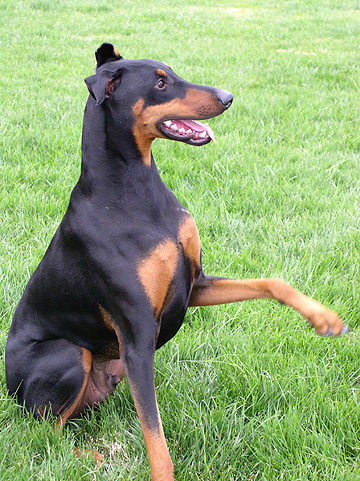
Many types of dogs like Italian Greyhounds, Great Danes, Greyhounds, Dachshunds or Dobermans have very thin coats and they need to be kept warm if they are going to be spending any length of time in the cold.  I've written often about how I am not into clothing for dogs as a fashion statement unless of course it is for a purpose like warmth.  Then I am all about keeping your dog nice and snuggly in some snazzy clothing.

Tilley often wears clothing, being that she is very old she has a difficult time cooling herself.  So we keep her nice and short which helps but also ensures that she stays fairly clean.  In the cooler evenings she can get cold so she has several coats that do the job nicely.  I tend to keep Luke with a longer coat as the weather gets cooler and the new little lady will get the same.  Jessie has a very thick and dense coat even though she is smooth coated so she goes au natural.  Also she hates wearing clothes.

I often see people with those naked type breeds; the ones with the very thin single smooth coat out in the cold.  Imagine if someone tossed you outside in the cold with no clothes on.  What should also be taken into consideration is the amount of time that a dog spends outdoors.  If they are indoors for most of the time except for a quick romp or elimination trip outside then they will feel the cold much more than a dog who spends more time outdoors.

As you pull out the sweaters; long johns and wool socks, consider your dog and their ability to keep themselves warm outdoors.  You may need nothing at all but a good brush; but perhaps you need to find a dapper new coat to keep them warm this fall and winter.

I'm back


Wow; how fast does time fly?  Crazy.  First I'd like to thank all of you who wrote to tell me how much you enjoy my blog and offered blog ideas for the future.  :)  Next I'm sure that you are all wondering how the baby is doing, right?  Well she is doing great and in the three weeks she's been here she has only had one accident.  It really helps having the older dogs show her where to go for sure plus making sure that she is out often and rewarded for going outside.


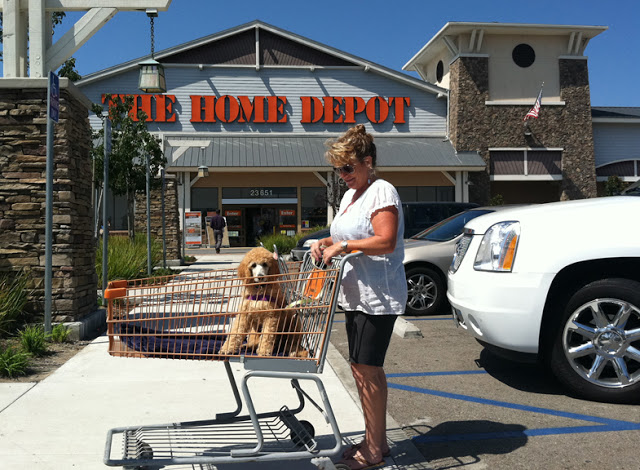
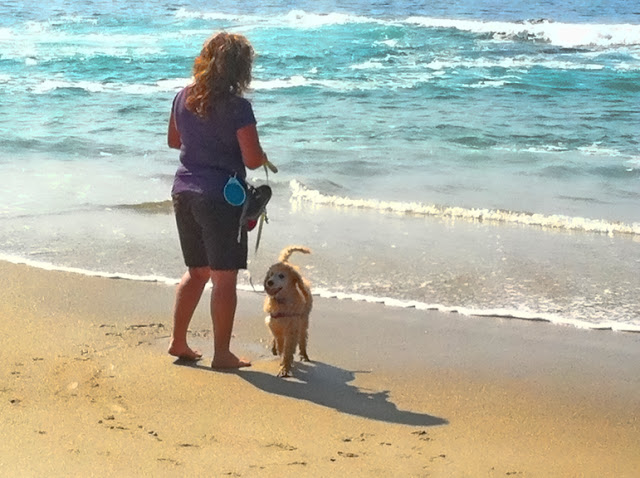
We've been lots of places with Elsa for socializing; she has had two sets of shots so far so anywhere that there is not a steady stream of dogs we have taken her.  She's been to Starbucks, Home Depot, the beach, a few friends houses, a couple of strip malls and the High School near us.  She adores people and likes other dogs, although we haven't had too many other dog encounters as of yet.  She will be attending obedience classes this Sat. or next Wed. which will be very strange for me.  I haven't been to a class in over twenty years and I will have to do a lot of smiling and keeping my mouth shut I would imagine.  Being a trainer myself and having trained for years it will be difficult to have someone else tell me how to do things.  I'm not sure if I'll let them know that I am a trainer myself or not yet, probably not.


Taking Elsa to class is for socializing; she will be with other puppies and at the end of the class they get to play so that is the important part.  At 11 weeks old she is very advanced as far as physical ability and I cannot imagine what she will be able to do once she is fully grown.  She is very confident yet mindful of the older dogs most of the time; except for the before dinner hour.  That is her bewitching hour and all rules are pretty much out the window.  This is typically when she learns many lessons as she hurls herself around at everyone; both dog and human alike.


It's good to be back; nice to have a break but now I'm ready to write.

I'm leaving


I'm leaving; just for a bit, I am taking a much needed break from blogging for a week.  I've been blogging steady now for almost 5 years so it's time to take a break, step back, regroup and start back fresh September 30th.  I've been pondering this for a week; don't know if I can just go cold turkey, weird.  I love blogging; I really enjoy sharing dogs with all of you but with everything, sometimes you just need a break.

What I would love while I'm gone is that if anyone has a topic that they would like to see covered, please let me know.  Feel free to leave comments here on my blog and  I can always be reached at sherri@justdogswithsherri.com anytime.  I love hearing from you all, and really enjoy when you comment on a blog.

As you know we have a new addition here so I won't be relaxing much.  :)  I have a great deal going on and I am looking at many different opportunities for Just dogs with Sherri and dogs in general.  Have a great week, and I will be back on September 30th.

The rhythm of routine


Morning all, I've written many times about routine; how it can be both good and bad depending on the particular routine.  Having a new addition in our house we are out of routine once again and it will take a while to get back there. I like routine so far as daily life running smoothly and that's about it.  I do not like to do the same thing day in and day out and tend to get bored with the same ole.  Having been through Vestibular disease with Tilley; it took us quite a while to work that issue into our daily routine.  Then Jessie was hit with dementia; another adjustment which took us a few months to figure out and we were back on track.

After that Tilley became quite incontinent; again more adjusting to work into the routine.  Two dogs that cannot hear, more altering to get back on track.  And now a new addition which has sent routine out the window.  Change is a funny thing, sometimes it is good, sometimes it can be bad and sometimes things just need a bit of shaking up.  I think the shaking up is where we were; with three old dogs we had slipped into too many mundane routines.  Well, that's all gone now.

With nearly two weeks under our belt with the new addition we are slowly getting back to order.  More than routine is adjustment; adjustment to change.  For a while it can seem like a wrench has been thrown into the works but with patience and a little tweaking to life customization it gets back to routine.  For me there are two meanings of routine; one good and one bad.  The good one is as I said, daily life playing out smoothly.  The bad being mundane; needing some shaking up with some change.

Routine can also be bad when you live with highly intelligent dogs, and I do.  This new addition "Elsa" is amazingly intelligent, scary intelligent so I have had to already switch things up.  It amazes me how quickly such a young puppy can figure it all out.  So as much as we will get back to life running smoothly; which is all about me adjusting, there will be no  mundane routine here for sometime.  And that's a good thing.

Road block


As a positive trainer specializing in behavior modification it is my job to figure out how best to do just that, modify behavior.  With each dog being an individual it is often a challenge; much time is spent pondering on how best to attack a specific problem.  As of late I have realized that my own Jessie has a serious road block, the gates of learning are closing.   She has not completely shutdown and locked the gates but the learning curve is diminishing and leaving a very small gap to work in.


Dementia:  severe impairment or loss of intellectual capacity and personality integration,     due to the loss of or damage to neurons in the brain.


Jessie has dementia and it is getting worse.  She mostly sleeps during the day and if she is up she is wandering mostly in circles.  One of the wonderful and amazing things at this point is that she is still using the dog door when she needs it during the day although her very early morning usage is not as reliable.  


Dementia is a horrible thing; both in humans and in dogs.  Every once in a while we see a glimpse of our girl come out and it is an exciting moment.  The other day I came home from the store; there she was at the front door and when I reached out for her she did not startle.  She also was wagging her tail, obviously happy to see me which is something that we rarely see now; I'm assuming this is because her recognition ability is also poor.  


Trying to get Jessie's attention let alone direct it is pretty much impossible.  I am often left wondering what is going on if anything in that little head of hers.  During her wandering she will often stop in my office and look up at me; at this point she slinks down and moves on as if she is sneaking away.  When I scoop her up to join us she is uncomfortable and tries to exit without notice once again.  It is a frustrating time.  


Old behaviors have remained but newly instilled once long gone now.  One of the newer behaviors which I had been most happy about was the one that she adapted only a couple of years ago.  After eating she was to go to her bed; this helped in her wandering into someone else's food bowl area.  She was unable to hear any growls or see warning signals which became dangerous.  That "go to" bed behavior is now gone and she is left standing over her bowl as she finishes up not knowing where or what she should do.  


Where we once had a wide open road ready for as much learning as we could throw at her; there is now a road block which I may or may not be able to get around.

Desensitizing


Desensitizing:  to lessen the sensitiveness of, to make indifferent, unaware, or the like, in feeling.


I have a great deal of desensitizing to do; with a new puppy in the house one cannot skirt the realization that dogs have unbelievable senses.  Living with dogs that slowly moved into the not so great hearing or seeing zone you tend to forget.  So I have a lot of anticipation going on with the new one.  Most of the anticipation is around feeding; she is a frenzy feeder, it seems that she can never get enough so the smallest of signals that it is feeding time sends her into a zone.  


The first step I have taken to break this is to hand feed her; I have gone between that and having her sit as I put small amounts into her bowl.   She is eating 4 times a day so it is not long between meals and she is getting a great deal of cheerios between meals with her training.  Yesterday I saved a whole meal as training rewards; making her work for her food.  This is great for grooming as well; dishing out food as I brush her makes brushing a wonderful thing.


I have to work on desensitizing the bowls; when she hears the sound of stainless hit the counter it begins.  So today there will be lots of stainless hitting the counter for no reason at all.  This is how you desensitize, you make the trigger sound a non issue.  This will be difficult because I still have to feed my dogs and I'm not throwing out all of my stainless bowls.  So with enough work I hope to lessen the frenzy zone to an inquisitive look.


Probably the biggest behavior problem over the years with clients as far as desensitizing has been leash crazies.  You know when you get the leash out or even move close to where the leashes are kept and your dog is sent into a frenzy?  Depending on where the behavior starts is where you start your desensitizing.  If you reach for the leash cupboard handle and it begins then you do this all day, every time you pass that cupboard.  Once you achieve the handle touch you can move to swinging the door open, getting closer to the leashes with each success.  Moving towards the goal of having calm dogs sitting to get their leashes on is totally doable.


Desensitizing must be done in baby steps to achieve success.  You have no choice but to attack the behavior at the fledgling stage.  Once a frenzy behavior is well into the zone it is very difficult to break through.  This is where most people make the mistake.  A dog in full frenzy mode is zoned out so to speak, they cannot even hear you.  So you have to get in there before they are in the zone.  


Luckily desensitizing is fairly easy; dogs are amazingly intelligent and they learn through association.  This is how you get into the zone in the first place, association and smarts.  So it is also how you get out.  

Friends


Friends, we all have them and they all fit into different categories.  Some are simply good acquaintances; others friends are people you see now and again but don't have a huge impact on your life and then there are the friends who are always there; a support system that you can rely on through thick and thin, someone you can turn to in need or just for fun.  You may not see these friends for months or years but the connection is never lost, a true friend in the purest meaning of the word.

Like us dogs have friends and they also fit into categories much like ours.   I love watching dogs meet up with friends; it brings much joy to me as a human when I see them light up by the appearance of a canine friend.  Luke is my easy read dog, that is if you know what the signals mean.  So when he meets friends in all of the different categories he displays appropriately.  He saves his "special friend" category for a very few select dogs.  He likes most dogs and any dog that he has met and hung out with will likely be on his friend list.

Unlike us dogs do not have friends who are simply friends by saying the word, they either are or they are not.  If a dog meets another and they do not mesh, they do not enjoy each others company and want to spend time together, then they will not be friends.  Friends let other friends get away with much more than non friends.  Watching friendships grow into the highest category of best friends is amazing.  Luke had a best friend, Ragzz, but sadly she passed away this year so now that BFF spot is open.

Dogs really enjoy getting together with their friends.  Just ask a dog park regular who takes allotted time out of their day just so that their dog can hang with the gang.   Being with friends is a great feeling; a time when you can let down your defenses and just have fun, be yourself.  I have witnessed several events where a friend dog has stepped up to the plate for another.  While being harassed by a "non friend" dog these friends will support each other in need.  Even though they are not a pack in the truest form of a pack of dogs; they have assembled a tight connection.  One that is not cluttered with image, ego or general BS like we humans tend to incorporate.

A friend is a good thing no matter who you are.

Things are going wrong with walking dogs


Most of my inspiration for writing comes from being out with my dogs. I frequent parks, beaches and open fields. Of course my favorite place to walk is somewhere quiet with my dogs off leash just running having fun but those places are becoming harder and harder to find; especially here. Although running off leash is wonderful; our dogs must learn how to walk nicely on leash, it's a fact of life. Yesterday when my husband and I had all three out having fun at the park a woman walked by with three little dogs on leash. She'd obviously been watching too much of a certain guy on television.

Our dogs were running everywhere; two were on leash (they have long leashes), Tilley was off leash doing her rehabilitation ball retrieving. The woman was far away but I could see her trying to get organized and then she proceeded. As she walked past us I watched; she bent down and gave one dog who was walking a bit out front a push to get back behind her. Okay so they looked happy enough; they were definitely cuties but were they having fun? Happy and fun are two different things.

We walk our dogs for our dogs; correct? Well; we actually walk them for us as well, a walk is always good for us but we mostly do it for our dogs. When I walk my dogs I like them to do what they enjoy; sniffing, lifting, wandering etc. I do not want my dogs dragging me down the street or across the park but I in no way want my dogs walking behind me like robots. If I head out on a power walk; meaning that I mean business and we are getting in some exercise, I allow sniffing for a good amount of time before we commence. Sniffing is what dogs do; they love it, so they get in a good amount of it before we start our non stop walking.

If you watch a pack of wolves move around in the wild; it is the Alpha who says where they are going. The top wolves decide which direction to go in but they don't have to be out front; that is a fallacy. The members of the pack watch the Alpha and go where he goes but the lower members are all about, even out in front. When I take my dogs for a walk in the woods and everyone is off leash they are following me; there is no doubt about it but they are like a pack of wolves, all around.

In my opinion having your dogs walk behind you is just not fun for me or my dogs. Now if they want to walk back there as my Tilley likes to; fine. But keeping them back there to show them who's boss defeats the purpose of why we are out for a walk.

Breaking it down


Learning is a very individual thing.  Each canine has their strengths and weaknesses like us.  One dog may excel learning quickly with lots of cheering on while others might learn by example or very slowly.  All are different and this is why a trainer which can be an actual trainer or you, the trainer of your dog must be flexible.  I remember many times going through the process with different dogs and every once in a while get thrown for a loop.  Sure they all are different but some are extremely different in how they will best gain the knowledge.

Going through the down behavior with Elsa this morning it quickly became evident that she was one who needed a behavior broken down.  She very rapidly grew frustrated and stopped offering anything.  This meant that she was not being rewarded quickly enough for her efforts.  We then went to treating for moving her head down.  From there she had to put her head to the ground for a treat.  The next step is the one leg out request or leaning back depending on how a dog actually lays down.  Elsa does the lean back, front legs stretched out in front.  And then finally the complete down position is required to get the reward.  Once they hit the final destination then you do not go backwards; they must continue to complete the desired behavior for a reward.

She is getting pretty reliable with her down already.  We moved from the carpeted area to the tile floor where she surprised me with a quick down.  Now we will work it into the daily routine where she will be required to down for anything that she would like; manners in the making.  The base behaviors are so important.  Once a dog starts to learn it is so much easier to teach them other behaviors.  The whole concept of learning can be lost on a dog who never receives any type of training.

Some dogs are not the type to offer up new behaviors, Luke is one of those.  He gets very goofy when we start new behaviors; he very much likes to get everything correct so he is not a fan of not knowing what he is doing.  For him a cheer leading session helps him to get over any apprehensive obstacles that arise.  Watching closely as a dog is in the learning process is essential.  They will display a great deal of information that is important in their further learning.

Make mine a tall one, please.


I've been going through old files lately with moving into my new office.  The other day I had a box out filled with binders; each overflowing with training clients from the past.  As I sifted through the pages some names prompted memories; others left me thinking hard trying to remember.  The books hold many years of dogs that I've worked with; some were a breeze, others had mild to severe issues.  Being that I was flooding my head with memories from the past; this lead to other memories rising to the top.  The calls.

I get a lot of calls; people in need of help.  Like my clients, some calls are long gone and remain in the past but there are some that I remember as clear as it was yesterday and I often talk about these when the topic comes up.  One call in particular was just that, a call.  It never got past the call as I would not agree to work with the dog.    The call came in on a late afternoon; I answered "hi this is Sherri."  The woman on the phone said that her vet had given her my name and she was to call me.  "What can I help you with?" I asked.  "Oh nothing" she quickly replied.  "Do you have a problem?" I inquired.  The woman stated that she had no problem; no issues with her dog.  So with my time ticking away I finally said "why did you call me?"

The woman told me that the vet had asked her to call me; so again I asked why?  Having been asked to cap her dogs teeth with soft covers because of a minor biting issue the vet had rejected her request and told her to call me.  After probing for answers, this conversation was going no where and a huge waste of my time.  "Why would you want caps on your dogs teeth?"  Finally bits and pieces started to emerge; but discovering the elusive facts was literally like pulling teeth.

The information that was slowly coming together was not the type that you want to hear.  The dog, a very large guarding breed was not fond of people in general but mostly men.  "He's a bit skittish" she exclaimed as I dug deeper for the truth behind the call.  So finally I had to ask "has he bitten anyone?"  She danced around the truth for what seemed an eternity until she finally said "yes."  As it turned out they were in the middle of a lawsuit; oh yes he'd bitten someone, badly.  And her reason for the capped teeth was for when it happened again, not if it happened again.  REALLY?

From there we went into the nitty gritty stuff, how, why and scenario facts etc.  Seems that the dog had been a backyard dweller; never having been socialized, living out his life with the same scenery day in and day out.  There had been no training and from the sounds of it there was no interest in behavior modification work of any sort in the near future.  She simply wanted the teeth padded so that it didn't hurt as much or inflict as much damage when he did it the next time.  This case was a nightmare and no professional in their right mind; like the vet who sent her to  me would get involved willingly.  An owner with a proven biter who did not want to work on his "issues?"  I was not being dragged into a lawsuit, no thank you.

I explained to the woman who she had to call; a person with a facility who dealt with aggressive dogs.  After hearing this she assured me that he was not aggressive............................hmmmmmm.  So I dug up the number for the training facility and said my good byes.  This was one of the weirdest calls I've ever gotten; but there are many more that have left me shaking my head trying to figure out the human race.  We're a weird bunch I tell ya.

Name training


Well; Elsa knows her name.  It didn't take long for me at all; she's a chow hound and chow hounds are very easy to teach if it involves food.  The thing is that she would drop whatever she was doing and come running if I called her, no one else.  So she was trained to her name in my voice, not actually her name.  So what's up?
No one else was rewarding her for responding to her name.  It meant nothing if someone else called because it literally meant nothing.  So now the training moves to the humans "everyone must be consistent."

She's got "sit" already, she came that way.   I'm not sure if the breeder taught her or she just figured that one out on her own.  Any time she would like something she sits; but if I wait her out she will eventually move.  She knows that when we go outside, I have a treat so she sits.  I try my hardest to keep the treat hidden but she has show she's got a high powered nose.    She also knows that if she pees she gets a treat so once I ignore her sit she goes and pees right away.

All day long I am calling out "ELSA," especially if she is busy doing something.  I call her name when she is going to eat, get a treat or play.  This has caused a very positive association to the word "Elsa."  I've met a great deal of dogs who didn't know their name, the owner didn't even know that their dog didn't know their name until I told them.  You can't just start belting out a word and expect it to mean something to your new dog.  You have to make it have meaning.  There should be a response to it, otherwise they don't know their name.  Of course unless they are older and simply ignoring you.  But even then there is usually some slight body language that lets you know that you are indeed being ignored.

So whatever you decide to name your puppy; let them know.  It takes a lot of repetition, sometimes so much that it can be annoying to the other humans around.  But it must be done so that you can move onto bigger and better stuff.  YES.

Socializing


Socializing is one of the most important things a breeder and new owner can do with a puppy.  The socializing should start right from day one and continue through to a dog's adult life.

Social:  to make social make fit for life in companionship with others.


Dogs left in a pack, away from human contact and regular daily life are far from the social dogs we thrive to live with.  Many dogs come from sketchy pasts to say the least and these dogs can have a great deal of difficulty simply fitting in.  It all starts with the breeder; it makes no difference what breed or mix you are talking about, they all need early socializing. 


Many breeders now are introducing some form of early stimulation; an introduction to different things very early on.  It is not suffice to leave a pile of puppies in a box without different sounds, sites and environments.  I've seen a lot of puppies and I've seen a lot of litters; puppies who are given the opportunity to thrive through early socialization are far better equipped to deal with life in general.  Early stimulation can be the simple act of introducing new things to a whelping box.  


Once puppies are of age to get out of their whelping box they should at least for a part of each day.   Of course all dogs being different; some will soar with early stimulation and socialization while some may need some extra work.  Puppies who are a bit apprehensive need a great deal of socializing but in well thought out rations.  Over stimulating puppies who are shy or fearful can backfire.  


Early Neurological stimulation

My new puppy deals with everything in stride; she has a very solid temperament as far as dealing with new things.  She notices new things, checks them out and then moves on.  Very much like Tilley she deals with new objects easily; unlike Luke who is a nervous type.  No doubt Elsa's wonderful life at her breeders which was filled with many new introductions to life itself helped her to become as prepared to deal with life in general.

Even rescue puppies need to be socialized in a big way.  Foster parents need to understand the early stimulation and socializing requirements needed to produce well adjusted dogs of the future.  Just taking care of their food and a roof over their head is not enough to succeed in life.  A puppy needs a great deal of introductions to sights, sounds and texture.  Everything that will be in their life around the corner.


Come?


Long ago when I was first training and working with dogs I learned the recall. Recall is basically the word for calling your dog and then they come.  But I learned the absolute worst way to get your dog to come to you, by anger and brut force. This was almost 35 years ago and some trainers still use these caveman ways of training. Looking back it is no wonder that people deal with the behaviors that go along with this type of training. The method was as such; we would put a dog on the end of a long leash, put them in a stay and walk away. Then turn around, face your dog and call them, encouraging them all the way. But, if they didn't come we were to yank them in, in a serious and firm forceful way. Ya, that really made them want to come in to us.

I honestly don't know what people were thinking back then, I know I didn't know enough to know any better.  I, like the other people in my class were listening to our teacher who we thought knew all this stuff. The harder we yanked the harder our dogs tried to stay away from us. Why on earth would a dog willingly walk into an attack situation? They wouldn't, it makes perfect sense to stay away and the association to the word "come" become a bad one.

Okay, enough looking back lets go forward. My dogs all come nicely even Luke and I have never yanked, hit or even grabbed them to do it. I teach all my dogs several verbal cues for coming to me. Some are very casual and don't mean that they must come right to me, others are very serious and mean get to me now or else. Now you might be wondering what my "or else" is. I know alot of people who know me and know my training methods can't wait to hear what my "or else" is. I'm such a positive trainer, what if my dogs don't come?  What do I do?

First your dog must know what "come" means, you can't enforce something if they don't understand it. Enforcing unknown commands is just unfair training at it worse. Once your dog is perfectly clear about what "come" means then you can enforce it.  If my dogs do not come to me I go and get them.  Using an upright posture I very clearly head in their direction.   Depending on the dog that I am communicating with at the time is the degree of seriousness in my body. If you use too much for your dog may just turn around and run and that does you no good at all. So you have to be careful with your "or else". What you want to tell your dog is that if you do not come when I call you, I'm coming to get you. And you must teach them the difference between not coming and coming. There must be a clear difference, its great when you do come you get hugs and kisses and lots of praise and in the beginning, the best treats.

Training for a recall should start right away, once you have taught your dog their name the next most important thing is to come. You start in your home by calling and rewarding. Its as simple as that. My word come means to come near me, they don't have to come and sit unless I give the sit command as well. They rarely get a treat but they do have to come. I have a built in whistle which means the same thing and they all come to it, they really seem to like that one. My serious word is "here" and that means you better get to me right away and sit. For my Jack Russell is often meant a treat because she has such a movement trigger that I often have to compete with that. My poodles still get a treat now and then to keep the word a powerful one.

Once your dog starts to understand what come means you start getting some distance between you and your dog. Going outside while your dog is inside and calling them. The most important thing in training a recall is to NEVER associate a negative to your word. Dogs are highly intelligent and if there is something bad about coming, they're not coming. Coming should always be a good thing. So watch how you use your word, be very careful when you use it and if you need to do something like put your dog in a crate or leave a park use another word like "we're leaving" or "kennel" but don't tarnish your "come" word.

As I watch people train and see some of their mistakes some of the biggest are not enforcing. Telling your dog to stay and then not enforcing that they stay or to come and not making sure that they come. Dogs learn that you don't mean a thing you say so they do what they want basically. This is where you can make or break your training. My boy Luke likes to push and often will see how not coming works for him. I will call and see him give me that sideways "I'm too busy to come" look. One harsh sound from me to let him know that I'm not allowing his "not coming" and he is on his way.

Then he gets the snuggies he loves and I love!

Introduction day


Good Monday morning everyone; I'm up bright and early.  I can't say that I'm bright eyed and bushy tailed though; I'm not one to enjoy rising at 4:15 in the morning.  But this is what happens when there is a new baby in the house.  That's right, we have a baby, a new puppy sort of baby.   She joined us on Friday morning and after days of deliberations we have settled on her name, Elsa.


She is of course sleeping in a crate beside my bed so that means that each and every little peep she makes has  me awake.  The first night she screamed for a few minutes and then settled quickly.  She woke about 12-15 times that night but just sticking my fingers through the edge of her crate was enough to let her know that she was not alone.  This still amazes me how well it works.


The second night here she woke only about half the time and again my fingers did the trick.  In fact my husband slept right through both nights; that is how well it works.  But come 4:15 that's it, my fingers no longer do the trick and it's time to get up.  I open up the door and she does a huge stretch before I scoop her up and we head outside.  She is quick to relieve herself because she knows what comes next, breakfast.  She's a chow hound which is a nice change from my Mr. Fussy pants.

This is just the beginning; we have lots of adventures ahead of us and you will hear all about them.  She is off to the vet this morning for her first check up and a set of shots.   Another new vet; unbelievable, so I'll let you know how it goes.

Prey drive


Prey drive; we've all heard it, what exactly is it?

Prey drive - is the instinctive behavior of a carnivore to pursue and capture prey.

Okay so that's where it started; but it has gone in many varied directions. Hunting dogs have been bred to retrieve downed birds without destroying them. Herding dogs have been specifically bred to round up animals without attacking them but having a very tough persona so they can control animals many times larger than themselves and some dogs have been basically stripped of their prey drive.

Not all prey drive ends in killing; often the drive is simply to chase, which is common in many dogs nowadays. When I temperament test puppies; one of the tests is designed to test drive. A test designed to assess the natural desire to chase in a puppy. Most average pet owners will not want a dog with a high drive; it can be a bad thing if you work long days and don't have a lot of time to spend exercising and satisfying the drive in your dog.

My girl Tilley was not tested;had she been she would have no doubt scored off the charts. Just yesterday I had her and Jessie at the school near by. We wandered the different fields; slow and steady. On our way back to the car we passed through a parking lot when a rabbit darted out; ran in front of us and up a hill. Tilley immediately flew into action; I yelled LEAVE IT. Being that she is 13 years old with Vestibular disease I didn't want her hurting herself. She stopped in her tracks; thought for a moment and gave me the finger. This is very out of character for Tilley; the ignoring me part that is. As the parking lot was fully fenced I decided to let her go for it; she ran a crooked full speed after the rabbit and up the very steep hill. It was then that I worried she might just fall down the hill; but luckily she managed her way down and was one very happy old gal.

Over the years I have worked very hard at keeping Tilley's drive under control. And it was at times extremely difficult; her drive to chase is unbelievable. After successfully transferring some of that drive onto objects like balls and frisbees it was much easier to control. Many dogs find obsessive outlets for their extreme drive; Tilley found shadows. Other dogs obsess over squirrels, cars or even bicycles. If you have a high drive dog you must find an outlet for it.

Many breeds have been bred with high drive so you can weed those out if you are not looking for drive. A couple of high drive breeds are Labradors, Border Collies, Kelpies, Sight hounds, Malinois and German Shepherds. Over years of careful breeding; many dogs have almost lost their drive completely. These are the dogs bred more for companionship; the ones that won't leave your side because a rabbit just ran by. But as I said; each litter contains different drives in each puppy. Jessie also has a high drive but hers is driven by the catch and kill; she really isn't into the chase so much. It is almost like she has no control over it; no thinking involved. She sees movement and it triggers her to run. Now at 14 it is far less only because she cannot see movement like she use to.

Drive is not lowered by age; it can only be controlled by training and management. If you have a high drive dog then you need to find an activity to redirect that drive. Agility, flyball, herding, frisbee or field trials are just a few of the outlet activities. The higher the drive the more work it is to control. If you are interested in participating in many sports and activities with your canine then you will want a certain degree of drive. Some dogs have no drive at all; preferring to spend much of their time watching sports.

Many people who I have talked to purchased their dog from working lines; thinking that they didn't want a show dog. Working lines have drive; these dogs are bred with more drive than the average dog because they are meant to work. You should be very aware of this when you go looking at a litter who's Dam and Sire are field champions. Field champion = drive.

I prefer to use the term drive instead of the more historic term prey drive. With human intervention much of it has just become a desire to to chase; with no kill requirement. Drive can pop up in a litter of non drive type dogs; but in general it follows certain breeds and lines. Unlike color or ear set; drive is something that will influence your life, it is important to understand it.

Rabies- repost

A much needed repost


Rabies vaccines; it's a hot topic these days. www.rabieschallengefund.org The Rabies challenge has brought it to the forefront and is digging into the facts. I have always got rabies vaccinations for my dogs but now into their senior years and having health issues I am not willing to compromise their health. With Titers you can reliably test the amount of immunity a dog has to certain diseases.

Great article on Titer testing

With a good titer result; our dogs are still protected but sometimes this isn't enough for the officials. With simple common sense it should be; you can have titers done for humans as well and that seems to be enough for us. Why should be re-vaccinate when the dogs body has enough immunity? They are finding out that over vaccinating is alot more dangerous than once thought.

I have a very inquiring mind; I always want to know more. If I hear about an important issue that I hadn't heard before then I dig in; I want the facts. I listen to what people have to say; take what I think is important and toss the rest. Life is a constant education; to deny facts, to turn away in an "I don't want to know" manner is really useless.


Take the whole Autistic/vaccine debate going on in the human world right now. Many just don't buy it; thankfully many are also digging.

Information on the Rabies challenge

We are only human and humans make mistakes; but to turn away from the facts is a disservice to us and our animals. Before you re-vaccinate; research, research alot.

A new beginning


You've just brought home your new puppy; how cute is she?  There she sits staring at you with those big brown eyes waiting; she is waiting for you to help her integrate into your human world.  Puppies do bad things; a common phrase but incorrect.  Puppies do bad human things; as far as being a member of the canine species they are perfect at that.  Of course not all are perfect at being dogs but most are.

Many folks go through a "pulling your hair out," stage with their new puppy. When I get the chance to talk to I some of the folks who are struggling I tell them this:  Just imagine; this puppy has only been alive for maybe 8-10 weeks or so.  They've been taken away from everything and anything that they've known over that very short time.  Then there are plunked into a new home, with new people and possibly new dogs to deal with.  Pretty scary if you ask me, just imagine.

We expect so much from them don't we?  Humans can conjure up the most wonderful image of the perfect puppy frolicking through a field of daisies, running beside us and gazing into our eyes with love.  First off, just try to find a big field of daisies.  From the day your puppy lands at your home you have to get to work; it's a big job creating a smooth transition for them but it is one that we chose when we home a puppy.  Education is the key to success; leave that little mind empty and they will fill it with whatever they see fit given the lack of guidance.

Patience along with education is what is needed to help puppies grow into well adjust mannerly dogs.  Dogs that can deal with our human world; after all it is a weird world that we live in, even for us humans.  Step by step, day by day we help the new ones work their way through each obstacle and challenge.  They will be watching you; examining each move you make and storing the information.  Knowing how much our dogs watch us helps us to monitor our own behavior; this in itself is guidance for the puppies.

The more calm and relaxed you are throughout your daily life will reflect upon your puppy.  When each problem, issue or challenge arises deal with it very steadfast.  Sometimes an acting job is required; something may have freaked you out just as much as your puppy but you must be the one to show the way.  Many times I've been big time startled by a very large dog charging my dogs.  No matter how I feel I step into the "leader" role and take control of the situation.  Taking the reins is often enough to calm a dog when they feel uncertain.

If you are one of the lucky ones with a new puppy; enjoy this time because with a blink of an eye it will be over and you will once again missing those puppy days.